Summarize this text with artificial intelligence
Choose your preferred tool to generate a short summary of the text.
The logistics sector is a field in constant change and development. Under the influence of digitalization, sustainability, and globalization, this sector is rapidly evolving.
Now, as we head towards 2025, we will examine together what milestones the international logistics industry can reach. Today, we will first look at historical data and then examine the future projections of Research and Markets.
If you are ready, let's begin!
How Has the International Logistics Sector Developed in the Last 5 Years?
When we examine the global logistics sector data over the last 5 years, we can see that it has a steady growth rate. The market size, which was 13.7 billion USD in 2018, showed a 20% increase in the last 5 years, reaching 16.5 billion USD in 2022.
Year | Market Size (USD Billion) | Growth Rate |
|---|---|---|
2018 | 13.7 | 3.8% |
2019 | 14.4 | 4.2% |
2020 | 15.0 | 4.5% |
2021 | 15.6 | 4.8% |
2022 | 16.5 | 5.5% |
Industry professionals and researchers project that the logistics sector will grow exponentially with a compound annual growth rate (CAGR) of 5.6% until 2028. This growth is attributed to a number of factors, including:
• Increasing global trade
• Growing e-commerce
• Rising demand for customized logistics solutions
• Technological advancements
Increasing Global Trade
Increasing global trade is one of the main drivers of the growth in the logistics and transport sector. As more and more goods are traded internationally, the need for logistics companies to offer efficient and cost-effective shipping services increases.
Growing E-Commerce
The growing e-commerce industry has also become one of the most important branches of growth in the logistics and transport industry. E-commerce retailers need to find ways to deliver their products to customers efficiently and cost-effectively, and logistics companies are innovating every day to provide these services.
Rising Demand for Customized Logistics Solutions
The growing demand for customized logistics solutions is another factor driving the industry's growth. Businesses are increasingly looking for logistics companies capable of providing tailored solutions that meet their specific needs.
Technological Advancements
Technological advancements also play a role in the growth of the logistics and transport sector. New technologies such as big data and artificial intelligence help logistics companies improve their efficiency and productivity.

How Were the Last 5 Years for the Turkish Logistics Sector?
When we examine the table below, it is possible to see that air transport in particular is the fastest-growing logistics branch in Turkey.
Sector | Growth Rate (2017-2022) | 2022 Market Volume (USD) |
|---|---|---|
10.1% | 12.4 billion | |
6.7% | 10.8 billion | |
4.7% | 6.8 billion | |
Rail Freight | 3.5% | 2.7 billion |
Warehousing | 3.1% | 4.2 billion |
This is followed by sea freight and road freight. Having reached a total market volume of 36.9 billion USD in 2022, and looking at the growth rates, it is possible to see that the growth will continue in the coming years.
Which Countries Grew the Most in the Last 5 Years?
When we examine the countries with the most overall logistics activity in the last 5 years, China has the largest logistics and transport market in the world with a market size of 1,630 billion dollars.
The United States is the second-largest market with a market size of 1,200 billion dollars. India, Germany, Japan, and the United Kingdom are other countries that managed to rank in the top 5.
Rank | Country | Growth Rate (2017-2022) | 2022 Market Volume (USD) |
|---|---|---|---|
1 | China | 15.3% | 1,630 billion |
2 | India | 12.2% | 430 billion |
3 | USA | 10.5% | 1,200 billion |
4 | Germany | 9.8% | 400 billion |
5 | Japan | 9.3% | 450 billion |
6 | United Kingdom | 8.8% | 350 billion |
7 | France | 8.5% | 300 billion |
8 | South Korea | 8.2% | 250 billion |
9 | Canada | 7.9% | 200 billion |
In these 10 countries, the CAGR (compound annual growth rate) for the logistics and freight sector is between 3.5% and 7.2%. This shows that the industry is growing rapidly in these countries.
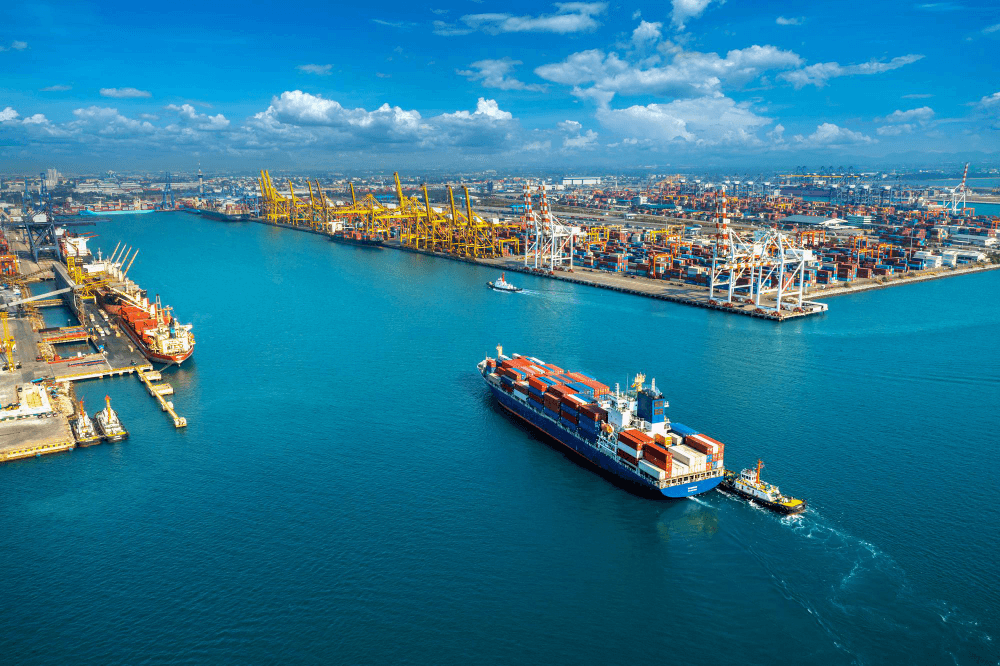
Top 5 Countries Turkey Exported to Most in 2022
In 2022, the country Turkey exported to most was Germany, with an export value of 22.2 billion dollars. The United Kingdom ranked second with an export value of 12.6 billion dollars. Iraq, the United States, and Italy are other countries that entered the top five.
Rank | Country | Export Value (USD Billion) |
|---|---|---|
1 | Germany | 22.2 |
2 | United Kingdom | 12.6 |
3 | Iraq | 10.5 |
4 | United States | 9.8 |
5 | Italy | 9.2 |
Looking at this data, it is possible to say that there are countries where SMEs, particularly those engaged in e-export, have a higher chance of success. You can send your products to anywhere in the world with Navlungo.
The main export categories from Turkey to these countries are as follows:
• Germany: automotive - spare parts, machinery, iron and steel, textiles
• United Kingdom: automotive - spare parts, machinery, iron and steel, textiles
• Iraq: food, textiles, iron and steel, construction materials
• United States: automotive - spare parts, machinery, iron and steel, textiles
• Italy: automotive, machinery, iron and steel, textiles

How Much Will the International Logistics and Freight Market Grow in 2025?
According to the report published by Research And Markets, the global logistics and freight market is expected to grow by 5.3% to reach 18.9 trillion dollars by 2025. This growth will gain momentum, driven particularly by rapid urbanization and industrial growth in the Asia-Pacific region, the boom in the e-commerce sector, and technological advancements.
This growth in the global logistics and freight market is supported by the globalizing economy and the increase in free trade agreements. Additionally, technological advancements that lower shipping costs and increase transaction speed will also contribute to this growth.
Particularly, the widespread adoption of blockchain technology will create a major transformation in the logistics and freight sector by increasing transaction transparency and reducing unnecessary expenses. This technology will help the sector become safer with its potential to prevent fraud and errors while increasing service efficiency by providing real-time data tracking throughout the entire logistics process.
On the other hand, the rapid growth of e-commerce became even more pronounced, especially during the pandemic. The increasing popularity of e-commerce increases the demand for logistics and freight services. This situation requires faster and more efficient distribution solutions to meet consumers' expectations and needs.
The Asia-Pacific region continues to be an important center for growth in the logistics and freight sector. This region stands out with its rapidly developing economies, growing middle class, and increasing consumer spending. These trends ensure that the demand for logistics and freight services continues to rise.
Consequently, technological innovations, the e-commerce boom, and rapid economic growth in the Asia-Pacific region will be the main factors supporting the growth of the global logistics and freight market by 2025.

4 Trends That Will Dominate Logistics and Freight Markets in 2025
The logistics sector is constantly evolving, and new technologies with the potential to revolutionize how goods are moved and delivered are always emerging. Prominent trends that are expected to shape logistics in 2025 can be described as follows:
• Artificial Intelligence (AI): AI is already being used in logistics for various tasks such as optimizing routes, predicting demand, and managing inventory. In 2025, AI is expected to become even more widespread in logistics, with companies using AI to automate more tasks and make better decisions.
• Big Data: Big data is another technology that is already having a major impact on logistics. By collecting and analyzing massive amounts of data, logistics companies can gain insights into their operations that can help them improve efficiency, reduce costs, and provide better customer service.
• Robotics: Robots are increasingly used in logistics for tasks such as picking and packing, loading and unloading trucks, and even driving vehicles. Robots are expected to play an even larger role in logistics in 2025 as companies look for ways to automate more tasks and increase efficiency.
• 3D Printing: 3D printing is still in the early stages of its development, but it has the potential to revolutionize how products are manufactured and delivered. In 2025, 3D printing is expected to be used to create a wider range of products, including auto and machinery parts, as well as consumer goods. This could lead to a decreased need for traditional manufacturing and shipping methods.
• Blockchain: Blockchain is a distributed ledger technology that has the potential to revolutionize how logistics data is managed. By creating a secure and transparent record of transactions, blockchain can help improve visibility and traceability across the supply chain. This can lead to reduced fraud and errors, as well as increased efficiency and cost savings.
These are just a few of the trends and technologies expected to dominate logistics in 2025. As the industry continues to evolve, new technologies with the potential to revolutionize how goods are moved and delivered will emerge.