Summarize this text with artificial intelligence
Choose your preferred tool to generate a short summary of the text.
The fundamental goal of logistics systems implemented by all businesses worldwide is based on the implementation of the supply chain with all its steps. Logistics 4.0, which has emerged for this purpose, digitizes all these processes and contributes to more practical operations for both seller and buyer parties. Many applications such as ending communication gaps among suppliers, improving warehousing operations, and keeping the communication between the carrier and all other systems dynamic can be enhanced with this concept.
Thanks to this system, where the needs of the company are also prioritized, situations such as the stock levels or total product capacity of businesses can be processed with precise data and managed by executives. This system, which is a highly efficient development for making accurate and organized planning, also greatly ensures trust between both the buyer and customers. Let us together look at many tips and points to consider regarding Logistics 4.0, which is one of the most important developments in the logistics industry.
What is Logistics 4.0?
Based on making the planning in the logistics industry more digital, Logistics 4.0 is very popular in terms of detecting objects or products in detail and obtaining precise answers in all feedback responses. Almost every innovation organized within this scope is created through self-managed systems. Consequently, more accurate communication can be achieved between management and production units. At the same time, this also increases the efficiency of firms or companies.

What Do the Components and Technologies of Logistics 4.0 Include?
Industry 4.0, which is one of the most important components of the Logistics 4.0 concept, covers the elements that contribute to establishing a competitive environment between firms and products. The developments and changes experienced in Industry 4.0 have positively affected logistics, paving the way for the emergence of the Logistics 4.0 concept. Thus, it has also contributed to the development of aspects such as sustainability, trust, traceability, and providing fast feedback between the customer and the seller.
In addition to this, establishing an accurate and secure supply chain holds an important position in almost all stages of logistics. Especially, increasing transparency and ensuring correct collaboration in the process from the moment orders are placed by the consumer to the delivery stage has a very important place in this regard.
What Are the Advantages and Opportunities of Logistics 4.0?
Logistics 4.0 offers many different advantages both for firms and buyers. Some of these are as follows;
• Tracking/traceability
• Speed
• Simultaneous and accurate data tracking
• Cost-effectiveness
• Increase in service and product quantity
• Detailed control opportunity
• Recognition and marketing power in the national and international arena
• Mutual trust and loyalty between customers and sellers
• Employee employment and efficiency
• Service quality
• Diversity of services
• Prevention of errors arising from human labor
Application Areas of Logistics 4.0
Logistics 4.0, which has emerged with the development of the logistics industry worldwide, is one of the indispensable structures of the supply chain. In particular, logistics activities based on the efficient transportation of almost every produced good, service, or the provided flow of information from the first stage of production to the last stage have evolved to the next level with Logistics 4.0 technology. In this sense, a very wide application area has been provided in terms of increasing the performance of businesses and meeting buyer expectations.
Through Logistics 4.0, a new flow of information is provided by firms or companies to enable the collection, analysis, and interpretation of data. Specifically, this system contributes to coming to the forefront in the areas of efficiency, measurability, and sustainability in the logistics sector.

Challenges and Barriers of Logistics 4.0
Although Logistics 4.0 is an important step in terms of digitization, it can create some challenges for both buyers and sellers. Particularly, the fact that logistics has a highly complex structure is one of the best examples of this. As is known, the logistics industry is a global business line. Therefore, shippers or warehouse operators located in different parts of the world may have to conduct operations within this complexity.
Logistics systems developing in multiple countries can cause various adversities due to differences between nations. Especially, situations such as countries having different standards, the use of different products or services, and IT systems being different from each other are important examples of the international challenges of Logistics 4.0. In addition to this, countries where labor is cheap, such as Turkey, may experience various issues in adopting this complex system.
Another significant issue is related to the lack of complete adoption of this technology. Most firms performing logistics operations find it quite difficult to use the right technology in the right place. Especially, this barrier is also characterized by some groups as the resistance employees display against change. The resistance adopted against change is one of the biggest obstacles in front of Logistics 4.0. The reluctance of most companies to risk financial losses in trying to improve their already achieved successes by using different systems can also be given as an example of this.
The successful implementation of Logistics 4.0 depends on the correct integration in specific business applications and information systems that support the process. For this reason, issues such as data security, which is carefully protected by users, can cause concern over breaches. The failure to protect data security or its breach can cause anxiety for many users in terms of both loss of customers and legal lawsuits.
The most appropriate solution for all these challenges that may be experienced could be to create a secure workspace. Therefore, the first step towards digital transformation can be taken by using the right software and the right technologies.

Successful Logistics 4.0 Strategies and Examples
Logistics 4.0 is associated with the digitization and automation of industrial processes, thereby making supply chains faster, more efficient, and sustainable. Successful Logistics 4.0 strategies and examples can be listed as follows:
• Real-Time Data Analysis:
Logistics companies can optimize supply chain processes by using real-time data collection and analysis, thereby making faster and more effective decisions. Amazon's Kiva robots can be given as an example. These robots use real-time data analysis to optimize the placement and shipment of products within the warehouse.
• Internet of Things (IoT):
IoT devices and sensors help monitor and control logistics processes. As an example, DHL's IoT-based "Smart Glasses" technology can be mentioned, which helps employees pick products quickly and accurately.
• Artificial Intelligence and Machine Learning:
Artificial intelligence and machine learning help learn and optimize logistics processes. For example, Google DeepMind's AlphaGo algorithm is also used in the logistics sector to provide supply chain optimization.
• Cloud-Based Software:
Cloud-based software allows logistics companies to manage their business processes faster and more effectively. As an example, Flexport offers its customers a cloud-based platform to manage their logistics processes easily.
• Automated Warehouse Management:
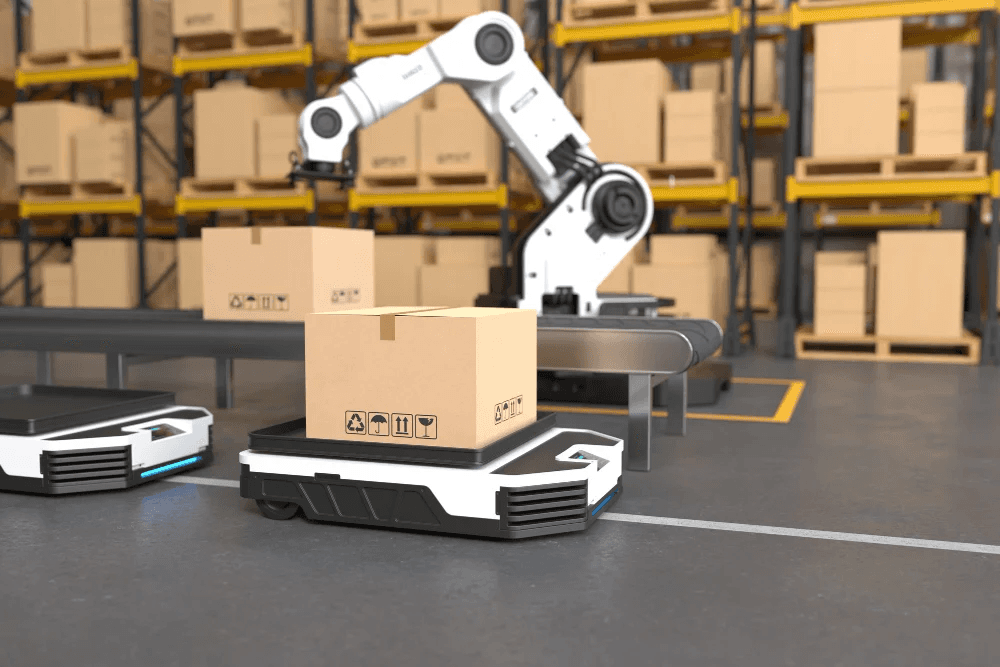
Automated warehouse management speeds up logistics processes to make them more efficient. Ocado's Andover warehouse center ensures fast and accurate shipment of products thanks to automated systems and robots.
• Smart Transportation:
Smart transportation uses IoT devices and artificial intelligence for the optimization of transport processes and increasing energy efficiency. For example, Tesla's electric trucks support sustainable transport by increasing the energy efficiency of logistics companies.
These successful Logistics 4.0 strategies and examples provide a competitive advantage by helping companies in the industry execute more efficient, faster, and sustainable processes. With the generalization of these technologies and strategies, the future of the logistics sector will become smarter, automated, and more sustainable.
Our Final Words on Logistics 4.0
When looked at generally, Logistics 4.0 is a concept that can be explained by smart products and services. This system, which can also be called 'smart logistics' to some extent, both enables businesses to work more flexibly and makes these businesses more preferable in the global market. Within this scope, customer satisfaction is ensured and production costs are minimized. Facilitating communication between humans and machines, Logistics 4.0 emerges as a result of using high-level internet technologies.
This system, which can be frequently preferred not only in national but also in international fields, is highly important for keeping up with the requirements of the times and taking the right steps. Enabling presence at every step of the supply chain, digital systems promise to prevent high costs resulting from labor and reduce them to a minimum level. In this way, it is possible to use the system correctly and systematically with the right guidance and authorizations provided by companies.