Summarize this text with artificial intelligence
Choose your preferred tool to generate a short summary of the text.
In today's fast-paced world, supply chain management has become more critical than ever. With the rapid growth of e-commerce, businesses must keep pace with the demand for fast and efficient delivery.
But how can they ensure their supply chains keep pace with this demand? This is where AI in logistics comes into play - a game-changer for the logistics industry, revolutionizing the way people move goods from one place to another.
AI in logistics refers to the use of artificial intelligence and machine learning to streamline and optimize the supply chain process. From process mining to customer service, from data collection to logistics services, AI is transforming every aspect of the supply chain.
But what are the advantages of AI in logistics? What are the benefits and drawbacks? What are the AI use cases and applications used in the supply chain industry? How is AI changing the logistics industry in 2023?
In this article, in addition to trying to answer all the questions mentioned above, we will comprehensively look at how AI solves common supply chain problems, as well as the exciting use cases and applications of AI in logistics, and examine how they are transforming the industry in 2023.
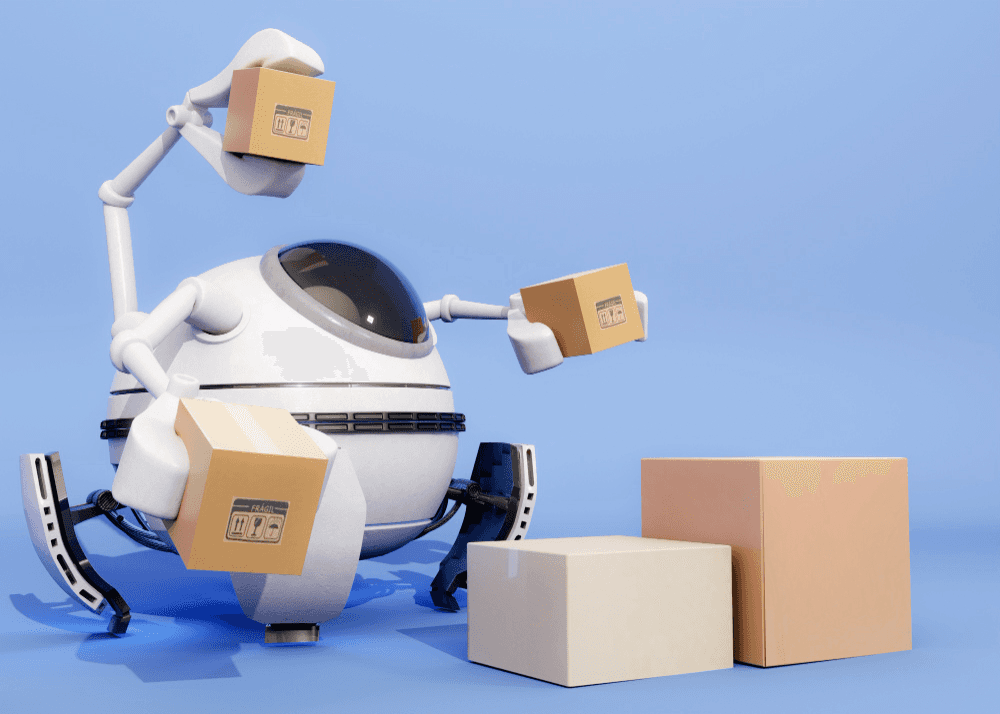
Exploring the Pros and Cons of AI in Logistics and Supply Chain
AI has recently been one of the most promising technologies for the logistics industry. It has the potential to revolutionize supply chain processes, increase efficiency, and save time and money. However, like any new technology, there are concerns regarding potential pitfalls and risks associated with using AI in logistics and supply chain. In this section, we will examine both sides of the argument and weigh the pros and cons of AI in the logistics industry.
Pros of AI in Logistics and Supply Chain
• Improved Process Automation: AI can help automate processes, reducing the manual intervention required in the logistics and supply chain process. This can improve the accuracy and efficiency of operations, increasing productivity as well as lowering costs. AI can also be used to process and analyze large amounts of data more quickly, enabling process optimization and improved decision-making capabilities.
• Enhanced Customer Service: AI can help improve customer service by providing faster response times and more accurate information. AI-powered chatbots can provide quick, personalized responses to customer inquiries, reducing wait times and providing an overall better customer experience.
• Increased Efficiency and Accuracy: AI can analyze registry-level data in real time, increasing the accuracy and efficiency of logistics and supply chain processes, thereby speeding up decision-making. This can increase the visibility of supply chain operations and minimize delays. AI can provide predictive insights into future demand and supply chain issues, mitigating anticipated risks.
• Improved Data Quality: AI can help improve the quality of collected and analyzed data, as well as reduce the risk of errors and omissions. Data collected by artificial intelligence is more accurate, which helps lower costs and eliminate costly and time-consuming errors.
• Advanced Autonomous Technologies: AI can be used to power autonomous vehicles and objects, allowing for more efficient and accurate delivery of goods, as well as improved inventory management and optimization.
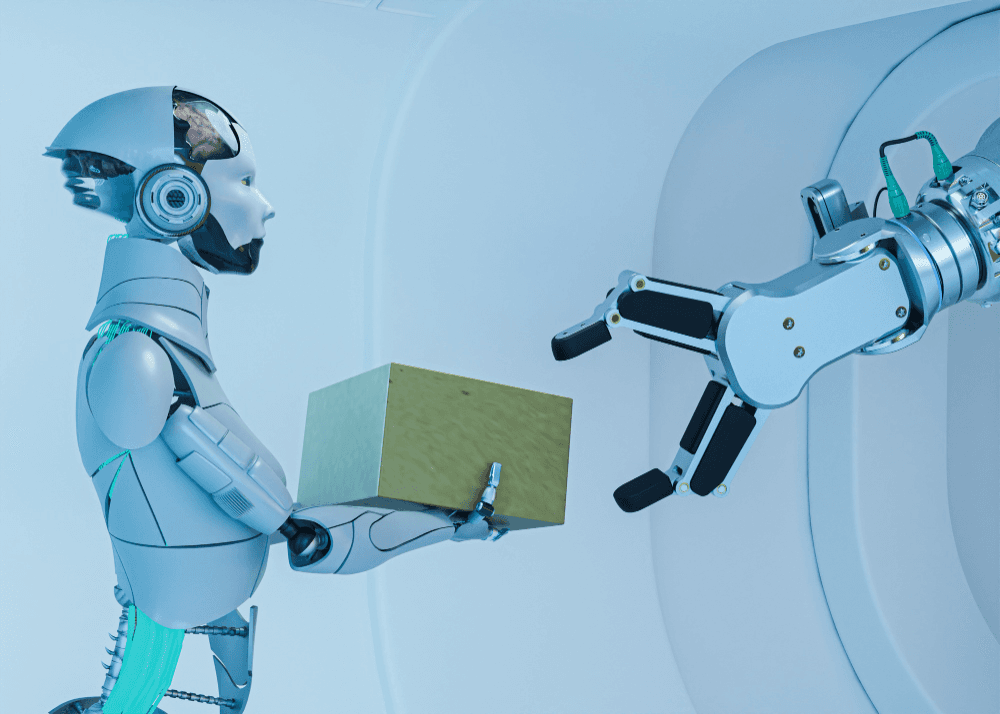
Cons of AI in Logistics and Supply Chain
• High Cost: Implementing AI technology in logistics and supply chain operations can be expensive, as it requires significant investments in hardware, software, and employees with the necessary expertise to use the technology.
• Lack of Transparency: As AI-powered technologies are still in the development phase, some issues regarding transparency still exist. There are concerns that decisions and actions taken by AI-powered systems may not be as transparent as required.
• Data Privacy and Security Risks: With the large amount of data required to feed AI-powered technologies, there is potential for data to be compromised. Companies must ensure their data is secure and that they are protecting customer privacy if they want to benefit from the technology.
• Lack of Diversity: AI relies on datasets to make decisions and learn. If datasets are not diverse or robust enough, AI can make incorrect decisions. This can be a problem if logistics and supply chain operations are using AI to manage inventory or route goods.
• Dependence on Synthetic Data: AI-powered technologies depend on the availability of high-quality data for optimal performance. Without this data, performance can suffer and lead to unexpected results. Companies must ensure the data required for AI-powered technologies is sufficiently diverse and complete.

12 AI Solutions for Common Supply Chain Problems
The global supply chain is a complex network with many moving parts, involving manufacturers, suppliers, logistics service providers, and retailers. With so many moving parts, supply chain issues are common. Fortunately, the advent of artificial intelligence (AI) is transforming logistics and supply chain management. Here are 12 common supply chain problems and how AI helps resolve them:
Inadequate Real-Time Data: AI-powered data collection and process mining help uncover issues and potential solutions in real time, making it easier to identify and resolve supply chain disruptions.
Quality Data Collection: By using synthetic data, AI provides reliable, accurate, and high-quality data for supply chain decisions.
Poor Inventory Management: AI-powered inventory management tools, such as demand forecasting and stock level optimization, can help companies better manage their inventory and anticipate customer demands.
High Transportation Costs: AI-based logistics services help find the most cost-effective routes and ensure optimized deliveries, reducing companies' transportation costs.
Capacity Planning: AI-powered capacity planners reduce manual effort and provide real-time insights into customer demand, shipments, and inventory levels, ensuring a smooth process flow.
Legacy Technology: Through machine learning and autonomous things, AI helps companies stay up-to-date with the latest supply chain applications, further improving customer service.
Delays and Unreliable Service Providers: AI-powered delivery trackers provide reliable data, ensuring better customer service and helping companies achieve on-time deliveries.
Fraud and Theft: AI helps identify fraudulent activities and leakages in the supply chain, helping companies quickly detect theft or losses and reduce damages.
Inefficient Processes: AI-powered process automation and autonomous vehicles help companies streamline their supply chain processes, making them faster and more efficient.
Lack of Transparency: An AI-powered supply chain transparency system allows companies to track the entire supply chain process end-to-end, resolving issues quickly and reducing delays.
Poor Customer Service: AI-powered chatbots and virtual assistants can provide 24/7 support to customers, increasing customer satisfaction and reducing the workload of customer service teams.
Lack of Visibility: AI-powered analytics can provide real-time visibility into the supply chain, allowing organizations to identify bottlenecks and take corrective actions.
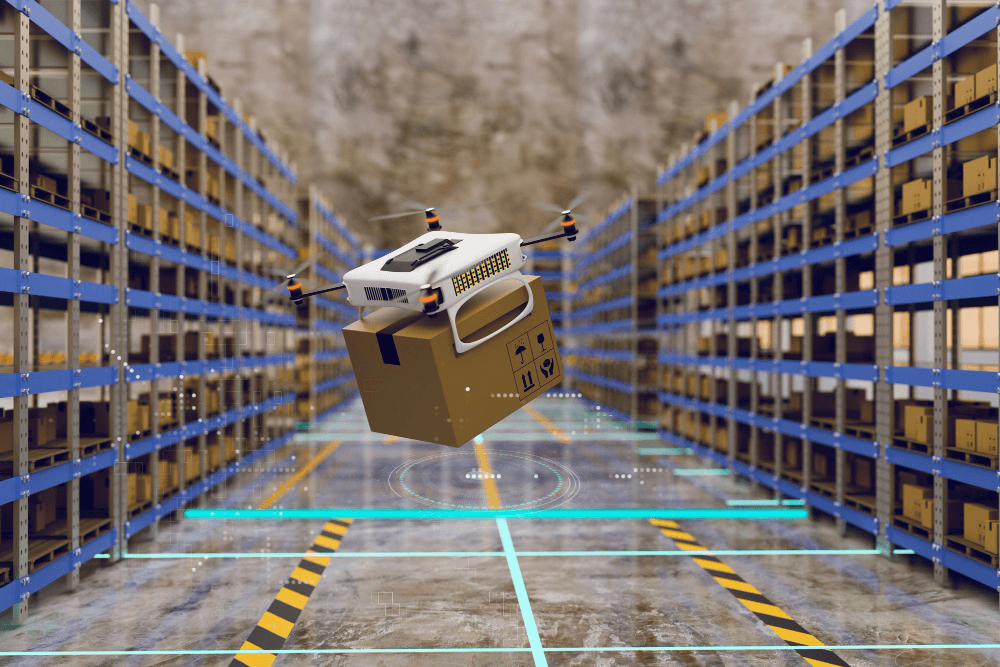
25 AI Use Cases and Applications Transforming the Logistics & Supply Chain Industry in 2023
AI technologies are already being used in logistics and supply chain use cases, becoming an invaluable tool for increasing efficiency in the sector. Here is a comprehensive look at 25 popular AI use cases and applications transforming the Logistics & Supply Chain industry in 2023:
• Process Mining
• Supply Chain Optimization
• Service Providers
• Process Automation
• Autonomous Vehicles
• Predictive Maintenance
• Demand Forecasting
• Warehouse Management
• Route Optimization
• Last-Mile Delivery
• Inventory Management
• Quality Control
• Supplier Risk Management
• Freight Matching
• Automated Document Processing
• Carrier Selection
• Energy Optimization
• Sustainability Tracking
• Order Management
• Real-Time Tracking and Visibility
• Autonomous Vehicles and Drones
• Robotic Process Automation
• Predictive Analytics
• Synthetic Data Generation
• Fraud Detection and Prevention
1. Process Mining
Process Mining is a technology that uses Artificial Intelligence (AI) to automatically track and analyze data related to business processes. It allows supply chain companies to better understand their processes and optimize them for maximum efficiency. Process Mining can also be used to predict customer data, analyze, and forecast future trends. Additionally, it can be used to identify bottlenecks and weak points in the supply chain, allowing companies to make quick decisions and optimize their processes accordingly.
2. Supply Chain Optimization
AI can be used to optimize the supply chain by analyzing large amounts of data and developing an actionable model. It can monitor and measure the performance of the supply chain and identify potential risks or areas for improvement. AI can also be used to measure customer responsiveness, order fulfillment, and inventory management.
3. Service Providers
AI is being used to automate services provided by third-party companies. For example, AI can analyze a large dataset to generate insights about customer behavior and suggest value-added services. It can also be used to develop strategies that help companies better manage supplier relationships and reduce supply chain risk.
4. Process Automation
AI can be used to automate and streamline routine logistics tasks, such as packaging and labeling orders, shipping items, scheduling deliveries, and tracking logistics. AI technology also enables predictive analysis of customer data to better anticipate customer needs and automate the fulfillment process.
5. Autonomous Vehicles
Autonomous vehicles are being developed to transport goods, saving time, money, and resources. AI can be used to power these vehicles, making them smarter, safer, and more efficient. Autonomous vehicles can reduce the need for manual labor and make the supply chain more efficient and cost-effective.
6. Predictive Maintenance
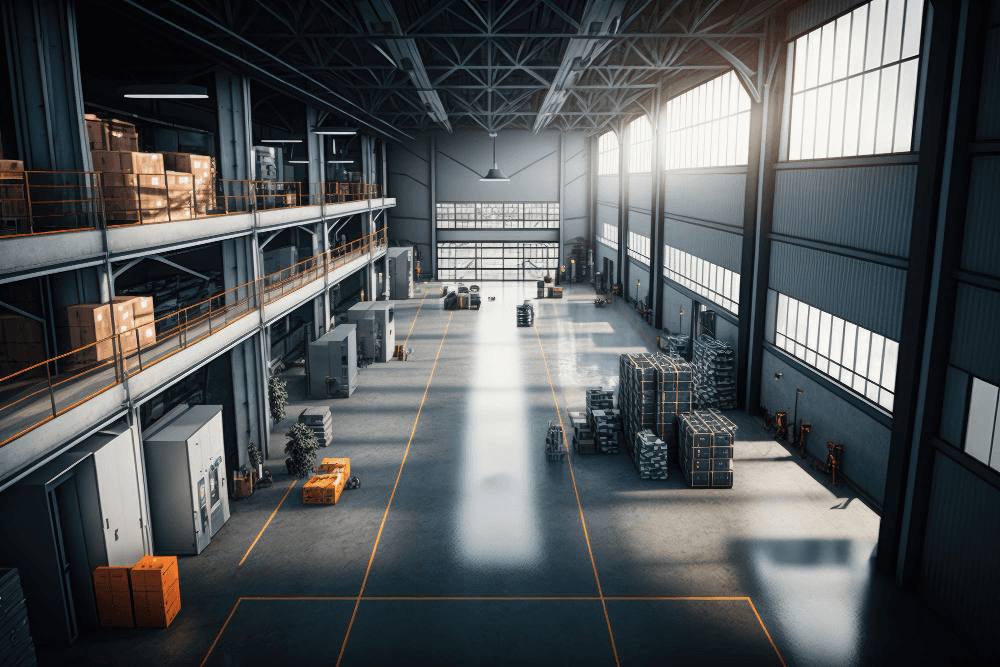
AI-powered predictive maintenance can be used to monitor and measure the performance of logistics and the supply chain. AI-driven analytics can be used to identify potential breakdowns before they occur, reducing costs associated with unplanned repairs.
7. Demand Forecasting
AI can be used to analyze customer and market data to generate predictive forecasts and demand models. AI solutions can also be used to develop an accurate inventory management plan, which can help prevent over- or under-ordering of specific items.
8. Warehouse Management
AI can help increase warehouse efficiency by optimizing product storage and tracking inventory levels. AI can also be used to automate receiving, packing, and shipping processes, which can help save time, money, and resources.
9. Route Optimization
AI analyzes customer data and generates the most efficient route for deliveries. AI-driven route optimization helps reduce turnaround times and increase customer satisfaction.
10. Last-Mile Delivery
AI is effective in modernizing last-mile delivery services by creating specialized delivery options like same-day delivery. AI can also be used to analyze customer data to create personalized delivery routes, reducing the time and cost associated with last-mile delivery.
11. Inventory Management
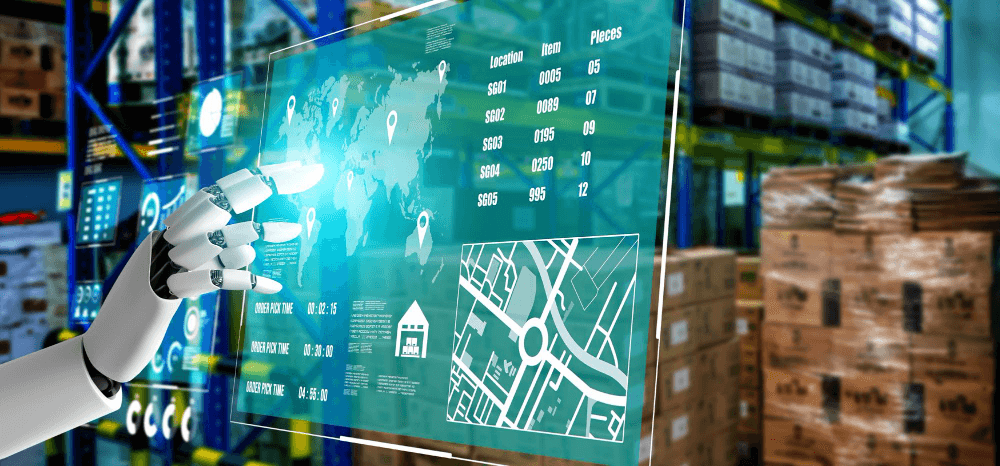
AI helps analyze and optimize inventory levels, predicting where customer demands and margins can be improved through proactive supply management. As mentioned earlier, it can also be used to improve demand analysis and forecasting with the aim of reducing inventory costs.
12. Quality Control
AI can be used to automate the quality control process by monitoring, analyzing, and inspecting products. It can also be used to identify flaws or defects to ensure goods are of the highest quality.
13. Supplier Risk Management
AI can analyze supplier information to generate a comprehensive risk profile. Through AI-driven analytics, it is possible to identify potential risks associated with suppliers earlier and help reduce the risk of supply chain disruption.
14. Freight Matching
AI can match freight with the best available carriers, negotiating better shipping costs. It can also be used to optimize and streamline the booking and tracking process, increasing customer satisfaction and reducing turnaround times.
15. Automated Document Processing
AI is effective in automating document processing by scanning and converting documents into digital format for faster access and storage. It can identify documents and cross-check them for accuracy, eliminating costly manual data entry.
16. Carrier Selection
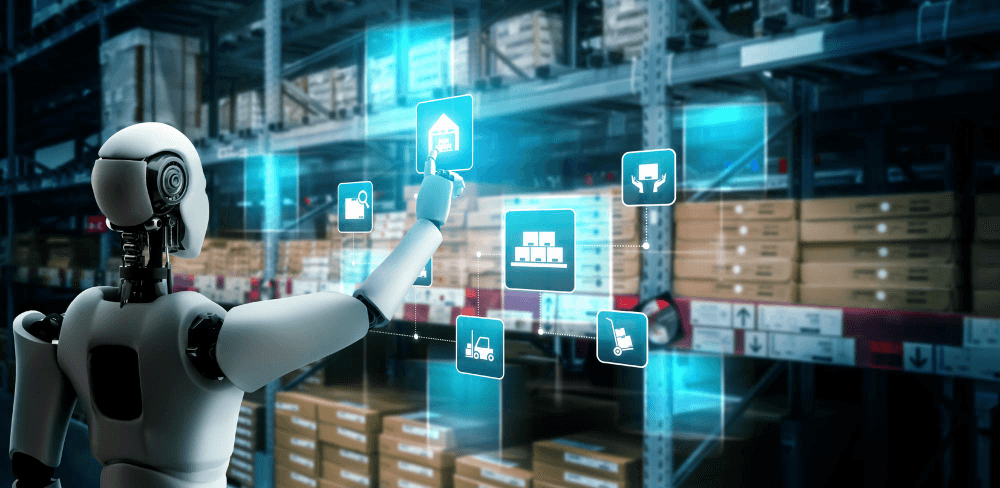
AI can be used to analyze historical performance and customer feedback to select the best carrier for the job. AI-driven algorithms can also be used for competitive bidding, making it easier to select the most cost-effective carrier for the job.
17. Energy Optimization
AI can optimize energy usage in warehouses and other supply chain facilities to identify inefficiencies and reduce energy costs, as well as track and analyze energy consumption data.
18. Sustainability Tracking
AI technology can track and monitor the environmental impact of logistics and Supply Chains on a global scale, using emerging analytics to identify best practices and potential improvements to create a more sustainable supply chain.
19. Order Management
AI is designed to automate order processing and optimize routing to increase efficiency and reduce delivery time. It can also develop order profiles by recognizing customer demands, preferences, and usage history to increase customer satisfaction.
20. Real-Time Tracking and Visibility
AI can be used to develop real-time tracking and visibility platforms that provide customers with up-to-date information about their orders. AI-driven trackers can be used to monitor incoming shipments, detect potential delays, and automatically notify customers about the status of their orders.
21. Autonomous Vehicles and Drones
Autonomous vehicles and drones can be used to improve last-mile delivery services for customers. Autonomous vehicles reduce the need for manual labor and make the supply chain more efficient and cost-effective. Drones can also be used to deliver goods over shorter distances, eliminating costs associated with traditional transport.
22. Robotic Process Automation
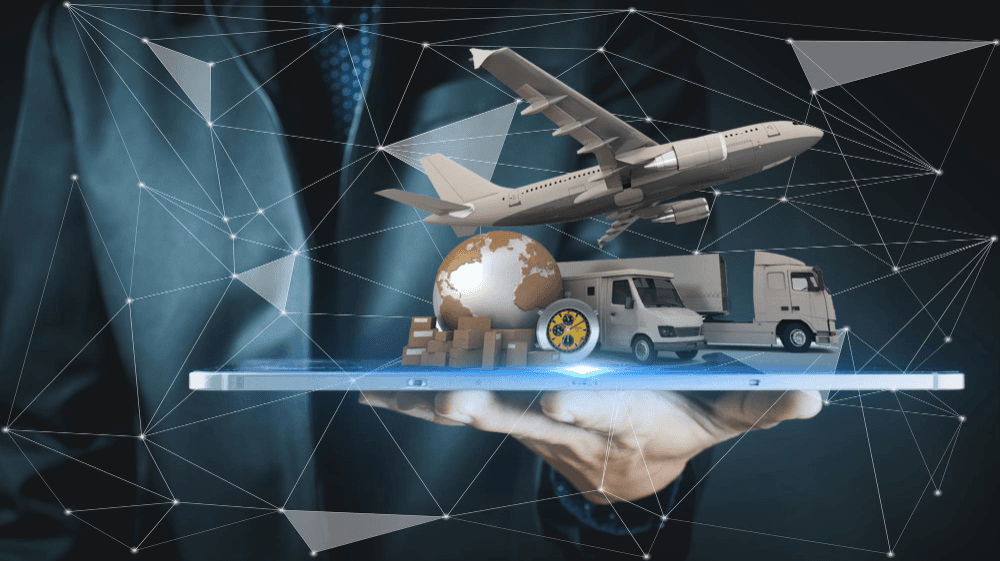
AI can be used to automate routine logistics operations, such as data entry, labeling, and packaging tasks. By automating these processes, robots can eliminate errors and improve accuracy, saving time and money.
23. Predictive Analystics
AI can be used to develop predictive models to forecast future customer demand and help organizations plan their supply chains accordingly. Models generated by AI can analyze customer trends to detect potential issues and generate actionable insights that can help prevent supply chain disruptions.
24. Synthetic Data Generation
This involves the development of synthetic datasets that can be used to train and improve AI systems. By creating synthetic datasets, AI can learn from its mistakes and improve its accuracy and performance over time.
25. Fraud Detection and Prevention
AI can be used to detect and prevent fraud in the logistics and supply chain industry. This is done by analyzing customer data and identifying any irregularities or suspicious activity, thereby helping companies reduce the risk of fraud and protect their customers.
Thus, it can be seen that Artificial Intelligence is already revolutionizing the logistics and Supply Chain industry in various ways. By automating routine tasks and processes, AI can reduce costs and increase customer satisfaction. Furthermore, by analyzing large amounts of data and providing predictive insights, AI can help optimize the supply chain and provide a necessary competitive advantage. As AI continues to develop, it has the potential to significantly shape the logistics and supply chain industry in the coming years.