Summarize this text with artificial intelligence
Choose your preferred tool to generate a short summary of the text.

While e-commerce continues to grow year after year, the dropshipping model offers a low-cost and flexible business opportunity for entrepreneurs. Amazon's leadership in the global market holds significant potential for dropshipping sellers. However, in the post-2025 period, dropshipping market trends are shifting rapidly, and sellers must adapt to this change. You can read on to learn about the future trends of Amazon dropshipping, the role of new technologies, and eventual risks.
2025 Trends in Amazon Dropshipping

As of 2025, one of the most remarkable trends in the dropshipping market is customer experience-oriented sales strategies. Sellers are not only sourcing products but are also investing in fast delivery, easy returns, and transparent communication. This increases customer loyalty. In the future, dropshipping businesses are expected to make their operational processes customer-centric.
Another important trend is the inclination to expand into global markets. Dropshipping activities targeting Amazon's marketplaces in different countries are gaining momentum. Sellers can offer their products not only in the US but also in markets across Europe, the Middle East, and Asia. Although this increase global competition, it also harbors immense opportunities.
Another reason customer experience-focused strategies have gained prominence is the influence of social media and reviews on purchasing decisions. Consumers no longer look at just the price of a product, but also at the service quality provided by sellers. Positive reviews and high store ratings rank among the most crucial criteria to stand out in the competition. Additionally, in the post-2025 period, personalized shopping experiences are gaining more and more importance. Thanks to AI-based recommendation systems, it is becoming possible to offer customized product suggestions to customers. This both increases sales conversion rates and strengthens customer loyalty.
The proliferation of automation and integration software is also at the heart of the 2025 trends. Instead of managing processes like inventory management, price updates, and order processing manually, sellers are shifting towards automated systems. Thus, the risk of error decreases and the workflow speeds up.
Rising Product Categories and Markets

Among the categories standing out in 2025 for sellers dropshipping on Amazon are health and personal care products. In particular, organic cosmetics, food supplements, and personal care devices are showing an increase in consumer demand. This field offers both high profit margins and a sustainable market.
Along with this, smart home technologies and electronic accessories are also on the rise. IoT-based products that make consumers' lives easier have high sales volumes. Especially the younger user demographic shows more interest in such products. This trend encourages sellers to turn to technology-focused products.
Pet products are also among the rising categories in 2025. Smart pet feeders, interactive toys, and eco-friendly accessories are in high demand in both the US and European markets. The loyalty of pet owners to these products provides sellers with a steady source of income through recurring orders. Another noteworthy field is hobby and lifestyle products. Fitness equipment, camping gear, and creative craft kits have increased in popularity due to changing lifestyle habits post-pandemic. Since competition is less intense in these categories, sellers who make the correct product selections can achieve high profit margins.
On a global scale, Asian and European markets are among the growing areas for dropshipping. While a competitive advantage is achieved in Asia thanks to cost-effective production, demand for sustainable and eco-friendly products is rising in Europe. Developing region-specific strategies for sellers will support long-term growth.
The Role of Artificial Intelligence and Automation
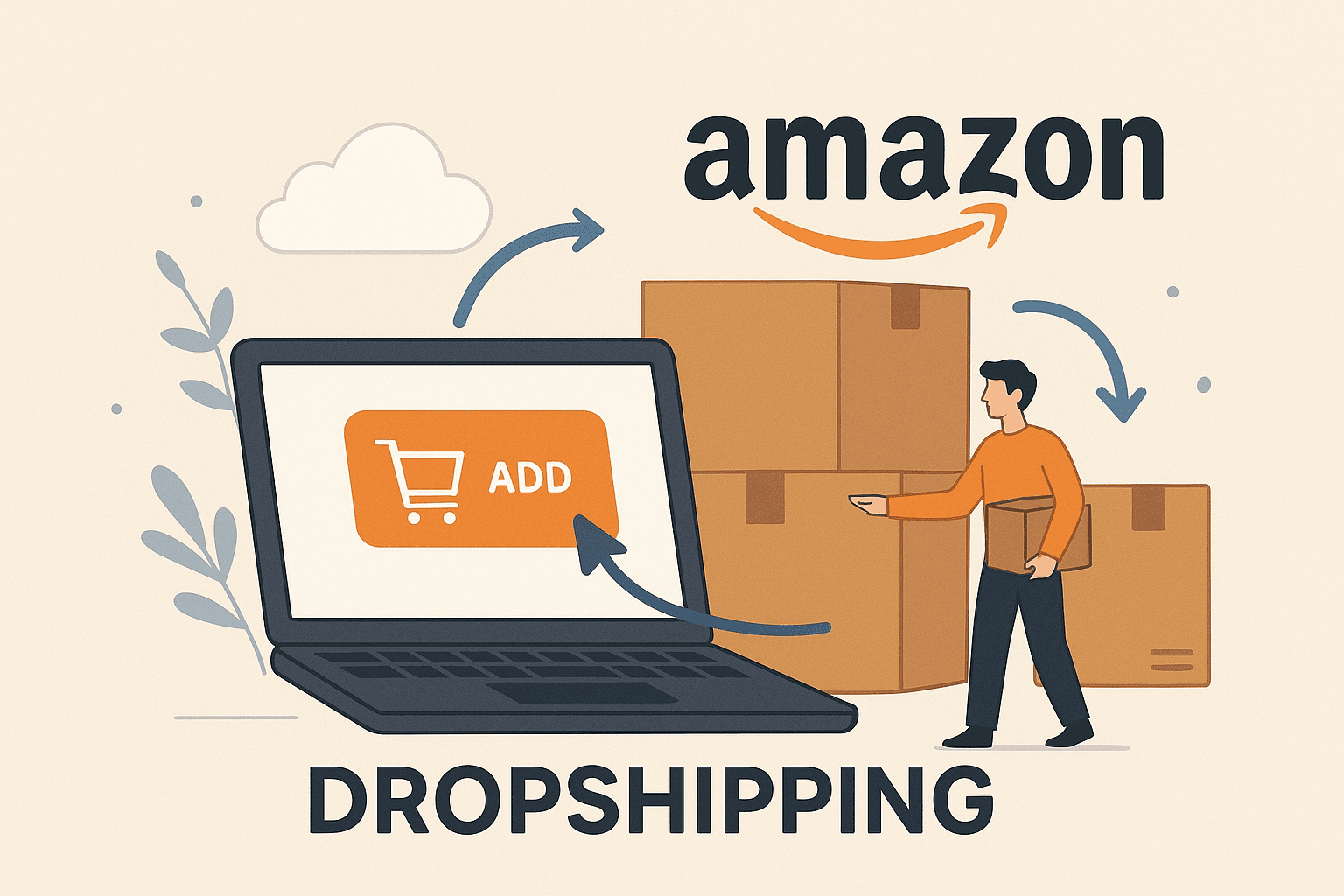
The use of artificial intelligence in e-commerce is fundamentally transforming the dropshipping business model. AI-based tools analyze customer behavior to offer accurate product recommendations. Through this, sellers can better understand customer needs and increase sales conversions.
Automation systems provide major advantages, especially in order management and pricing processes. While manual operations cause loss of time, automation software grants a competitive edge with real-time updates. This allows sellers to focus more on marketing and customer relations.
AI has also begun to play an active role in product listing optimization. Algorithms can analyze keywords to automatically edit product titles and descriptions. In this way, instead of manual optimization, sellers can rank higher in search results faster and more accurately with AI support. Along with this, customer support processes are also undergoing a transformation with AI. Chatbots speed up communication by providing instant answers to customer questions. This increases customer satisfaction and allows sellers to use their time for strategic decisions rather than operational tasks.
It is predicted that AI will play a more active role in logistics processes in the future. AI solutions in areas such as smart stock management, delivery estimation, and supply chain optimization will lower sellers' costs while increasing customer satisfaction.
Sustainable Dropshipping Strategies
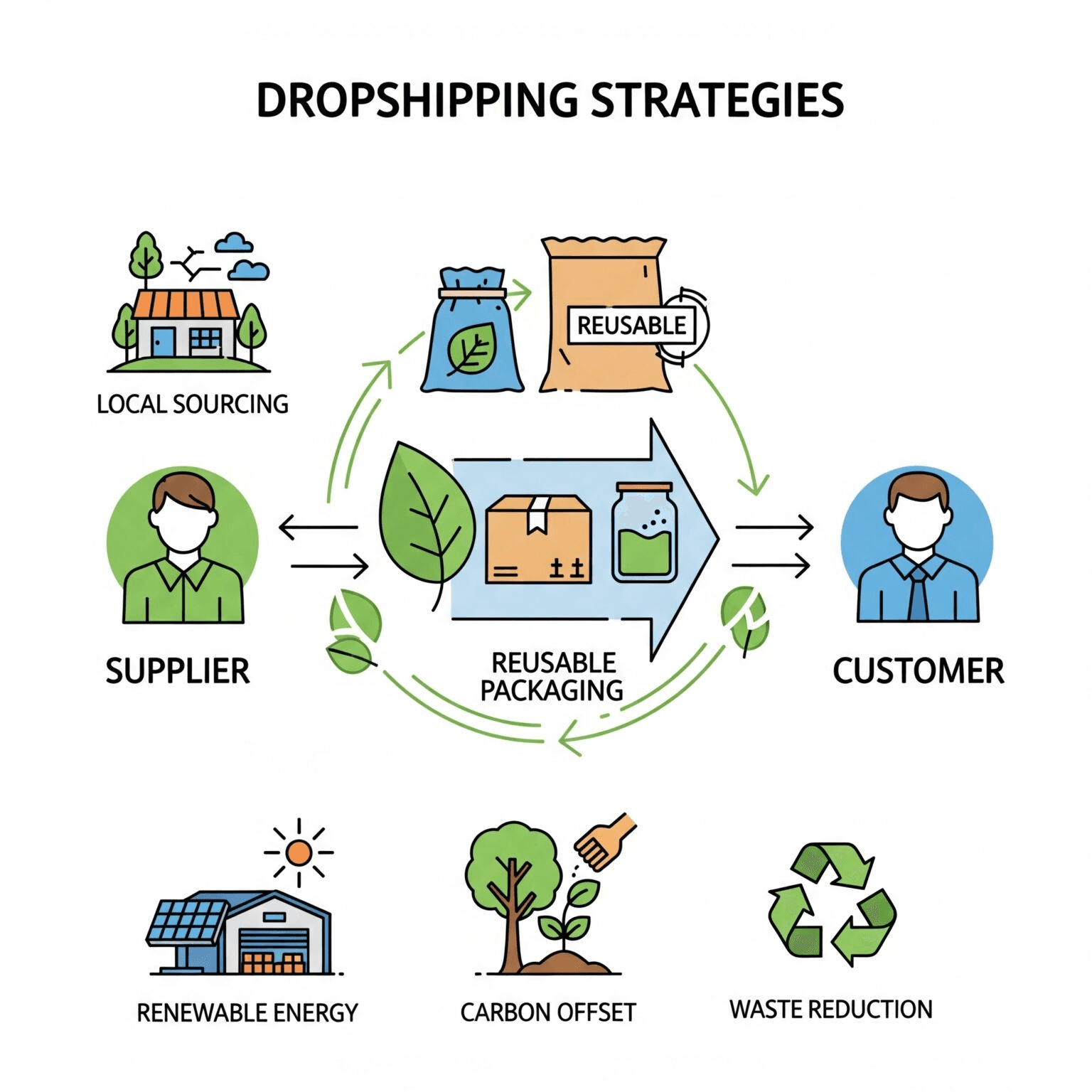
As of 2025, consumers' purchasing habits have changed significantly. Especially the younger generation gravitates toward products with eco-friendly and ethical production processes. This allows sellers who develop sustainable dropshipping models to stand out. Sustainability is not limited to the product itself; it is also crucial in packaging, shipping, and supply chain processes. Sellers who prefer recyclable packaging and low carbon footprint logistics solutions gain an advantage in the eyes of the customer. In the future, Amazon is also expected to support green initiatives. Accordingly, it will be possible for sellers to secure a stronger position in the global market by investing in sustainable products and developing eco-friendly strategies.
Sustainable dropshipping strategies can also provide a long-term cost advantage. More durable products mean a lower return rate. Eco-friendly packaging and smart logistics solutions, although slightly more expensive at first, pay off in the long run by earning customer loyalty and brand reputation. Furthermore, governments and international organizations are introducing regulations that support green policies. Therefore, sellers must be prepared for potential regulations in the future. Sustainable dropshipping models will not only meet customer demand but also put sellers in an advantageous position in terms of legal compliance.
Risks and Opportunities Awaiting Dropshipping in the Future
Although the future of dropshipping is full of opportunities, it also harbors some risks. Intense competition, low profit margins, and supplier-related issues are among the fundamental challenges sellers may face. For this reason, sellers should not focus only on short-term gains. Nevertheless, the growth of global e-commerce brings new opportunities along with it. Especially in emerging markets, the dropshipping model offers the opportunity to reach large audiences with low capital. It is important for sellers to follow regional trends to capitalize on these opportunities.
Lastly, the future of dropshipping in the global market will be shaped by technological developments. AI, automation, and sustainability-focused approaches will both minimize risks and create new opportunities. Sellers' adaptation to this transformation will be critical for long-term success.
The future of Amazon dropshipping is being redefined by technological advancements and changing consumer expectations. The 2025 dropshipping market trends are built on AI, automation, sustainability, and new product categories. Sellers can secure a strong place in the global market when they closely follow the rising product categories on Amazon and develop eco-friendly strategies. Despite the risks, dropshipping will continue to be a profitable and sustainable business model in e-commerce when implemented with the correct strategies.