Summarize this text with artificial intelligence
Choose your preferred tool to generate a short summary of the text.
SKU (Stock Keeping Unit) is an alphanumeric code system created by businesses to easily identify, track, and manage their inventory. After learning what SKU means, the step of determining the stock code should be initiated.
Because an effective SKU system ensures businesses succeed in many areas such as customer service, inventory management, and reporting. In this article, we will address answers to questions such as what is an SKU, why is it important, how is it created, and what you need to pay attention to. Now, let's easily discover the answer to the question of what is a stock code and much more!
What is SKU (Stock Keeping Unit)?
SKU stands for "Stock Keeping Unit" and is expressed as "Stok Kodu" in Turkish. The answer to the question of what is an SKU can be given as a code system consisting of letters and numbers that uniquely identifies a product or service. It is used in many fields such as retailing, e-commerce, warehouse management, and logistics. SKU codes can represent various features of a product, such as color, size, brand, and packaging type.

SKU and Other Code Systems
SKU is different from other product coding systems such as barcodes or EAN (European Article Number). Barcodes and EAN are usually determined by the manufacturer and used by all retailers. On the other hand, the SKU is created by the retailer or business and only holds meaning within that business.
Are SKU and Product Code the Same?
Although there are conceptual similarities between a product code and a stock code (SKU), they can differ depending on the context in which they are used. The answer to the question of what is a product code is that it is an identifier used to define the general category or type of a product.
This code may represent a general categorization or classification and may not contain information about specific variations of the product. Additionally, for the question of where the product code is written, the answer can be given as on the label on the product, on its packaging, or in documents related to the product.
On the other hand, coming to the question of what is an SKU code; an SKU is used as a unique identifier for specific variations of a product. SKU frequently appears in the context of retail and inventory management and plays a critical role in product tracking.
These nuances between the two terms should be taken into account especially in business processes such as inventory management, sales, and product cataloging.

Why is SKU Important for Businesses?
SKU (Stock Keeping Unit) is not just a combination of numbers or letters for businesses; it is also a critical tool in terms of business efficiency, customer satisfaction, and profitability. The important aspects of the stock code for businesses can be listed as follows:
Simplifies inventory management
Good inventory management is indispensable for businesses. With the help of SKU codes, businesses can easily monitor the quantity of products in stock, which products sell faster, and when an order needs to be placed. As a result, costs are optimized by stocking neither too many nor too few products.
Enables data analysis and reporting
SKU allows you to collect detailed data on which products are sold when and where. Thanks to this data, you can develop more effective sales strategies, optimize your current product range, and predict what types of products might be more popular in the future.
Improves customer experience
Customers shopping in online or physical stores want to access the product they are looking for easily and quickly. SKU speeds up product search and filtering processes, thereby increasing customer satisfaction.
Allows for quick and accurate shipping
The SKU method is also critical during shipping and distribution phases. Locating a specific product helps in fulfilling orders correctly and quickly.
Helps you easily manage e-commerce platforms and marketplaces
If you sell on multiple platforms, SKU codes hold much more importance for you. For example, using the Etsy SKU system, you can easily manage the stock status, price, and other details of your products in the Etsy marketplace.
How is SKU (Stock Keeping Unit) Determined?
When creating an SKU (Stock Keeping Unit), it is essential to establish a unique code for each product or product variation.
1. It should be simple and clear
When creating an SKU code, it is important that the code is understandable and memorable. Instead of complex and meaningless combinations of letters or numbers, you can use short words or abbreviations representing the features of the product. For example, "Red_Sports_Shoes_42".
2. It should reflect product features
The SKU code should reflect the features of the product. Indicating important details such as color, size, brand, and model in this code helps both you and the customer identify the product easily.
3. It should be suitable for sorting and filtering
Since SKU is frequently used for inventory management and product tracking, it needs to be easily sortable and filterable. At this point, you can use prefixes such as "MEN_" for all men's shoes or "RED_" for all red products.
4. It must be unique and permanent
Each SKU code must be completely unique. Even when indicating different variations (different colors or sizes) for the same product, you must create a different SKU for each variation. Additionally, once an SKU code is created, it should not be altered.
5. It must be scalable
As your business grows, you should remember that your product range will expand. Therefore, you need to ensure that your SKU system is easily scalable when you design it.
6. It should be compatible with e-commerce and physical stores
As a business, if you operate in both physical and online stores, it is critical that your SKU codes are consistent between these two platforms. Such consistency allows you to perform inventory management centrally, more efficiently and error-free.
Furthermore, if you sell on popular online marketplaces like Etsy, Amazon, or eBay, you need to consider the specific requirements and constraints set by each platform for SKUs. This way, your product listing processes will proceed smoothly and your credibility with customers will increase.
7. Software and tools should be used
Inventory management software and other tools can simplify the SKU creation process by automating it. These kinds of tools are highly beneficial, particularly for businesses with a wide product range.

What Should You Keep in Mind When Creating an SKU?
Being careful when determining SKUs is of critical importance for your firm's efficiency and customer satisfaction. The key points you need to consider when creating an SKU can be listed as follows:
• When creating an SKU, numbers and letters are generally used together. The important point to note here is to avoid using characters that can be easily confused, such as the letter "O" and the number "0", or "I" and "1".
• Avoid using special characters (^, %, $, @, etc.) or spaces. These are not recognized by most inventory systems and can lead to confusion.
• An SKU code should be neither too long nor too short. Between 8-12 characters is considered ideal.
• You should establish a standard for all SKUs. For example, the first four characters could represent the product category, and the next four characters could represent the product's color and size.
• Once an SKU has been created and that product goes out of stock, that SKU should not be reused.
• If you sell a product with different variations or models, construct a grouping or hierarchy for these products.
• If you sell your products on different platforms (e.g., Etsy, Amazon, etc.), you can create a different 'external' SKU for each platform. However, you need to link all of these with a 'domestic' SKU.
• When SKUs are created manually, it can lead to mistakes and disorganization. Automated tools and stock management systems help you complete this process in a more effective and flawless manner.
By paying attention to these details when creating SKUs, you make a major step forward for your business's inventory management and customer service. An SKU is a tool that seems small but has massive impacts. Therefore, care should be taken to use it in the most effective way.
SKU (Stock Keeping Unit) Examples
Theoretical knowledge is certainly important when creating an SKU (Stock Keeping Unit). However, practical examples always provide more insight. Here are SKU examples for different types of products and businesses:
Clothing sector
• Men's T-Shirt, Red, Size M: MEN-TSHRT-RED-M
• Women's Dress, Black, Size 36: WMN-DRSS-BLK-36
Electronic products
• iPhone 12, 64GB, Black: IP12-64GB-BLK
• Sony Television, 42 inch, UHD: SONY-TV-42UHD
Books and stationery
• Harry Potter Series, Volume 1: HPTR-VOL1
• A4 Notebook, Squared: A4N-SQR
Food and beverage
• Organic Tomato, 1 Kg: ORG-TMT-1KG
• Wine, Red, 2019: WN-RED-2019
Automotive sector
• Oil Filter, for Ford: OLF-FRD
• Car Tire, 17 inch: CRT-17IN
Etsy SKU examples
If you are selling on a platform like Etsy, you should also take the platform's SKU requirements into account. At this point, the best answer to the question of what is an Etsy SKU is exemplification. Here are Etsy SKU examples:
• Customizable Necklace: ETSY-CUST-NKL
• Handmade Wooden Painting: ETSY-HNDM-WDPNT
Multi-Platform SKU examples
If you sell your products on more than one platform, you might consider adding the platform name into the SKU as well:
• Men's T-Shirt for Amazon, Red, M: AMZ-MEN-TSHRT-RED-M
• Women's Dress for Etsy, Black, 36: ETSY-WMN-DRSS-BLK-36
Where is the SKU Found?
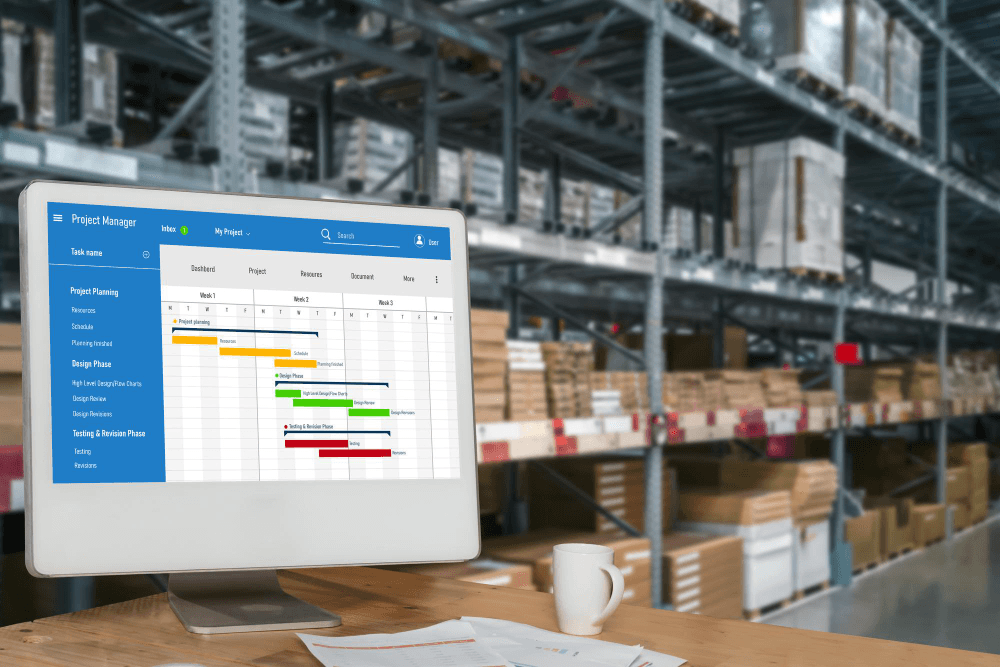
SKU (Stock Keeping Unit) is an alphanumeric code system that enables quick and error-free identification and tracking of products. The most common channels where these codes are present include product labels, online shopping sites, invoices, order documents, warehouse and inventory management systems, barcodes, QR codes, product catalogs, manufacturer and supplier documents, and physical stores.
Especially on e-commerce platforms and in wholesale purchases, products can be easily identified thanks to these codes. For warehouse workers, placing, moving, and tracking products also becomes practical because of these codes.
Additionally, in physical stores, it enables products to be quickly identified on shelves or at checkouts. The wide scope of SKU guarantees easy access to product information for both businesses and customers. Therefore, having an efficient SKU system is of critical importance both for businesses and customers.