Summarize this text with artificial intelligence
Choose your preferred tool to generate a short summary of the text.
Many businesses that want to expand their markets and opportunities globally, achieve high profit margins, and stimulate the local economy choose to bring their products and services to the international arena. This is the process defined by the term export. However, exporting involves much more than just sending your product to another country.
It consists of many stages, such as market research, obtaining the appropriate documents, product packaging, shipping and customs procedures, payment, and the delivery process. In this content, we will examine what exporting is and how it is done!
What is Exporting?
The most accurate answer to the question of what exporting is, in a general sense, is the selling of goods, services, raw materials, and products produced within a country to other countries in exchange for foreign currency.
This concept, which can also be called foreign sales or foreign trade, also covers importing. How export transactions are carried out varies from country to country. In this context, each country has its own specific procedures.
Today, it is possible to say that almost every product, good, project, or service is included in the scope of exporting. Especially everything that has become global over time further strengthens the foundation of exporting.
In this context, specific fees must be paid for almost all of these products and services. These fees are determined by taking into account the countries' currencies or the most commonly used currency worldwide.
The price of the sold product, service, or good is paid by the connected buyer abroad on the dates specified in the contract.
Who Can Export?
Almost any natural or legal person with a tax identification number can export. For this, first of all, it is necessary to become a member of the Exporters' Association. This requirement does not apply to micro-exporting alone.
Therefore, to follow a more accurate and hassle-free path, it is beneficial to consult a customs broker. In this way, it is also possible to get information about which products can be exported.
You do not necessarily need to be a manufacturer to make easy exports. Moreover, you do not need to obtain a special permission to export. However, various permissions regarding the nature of the products or services to be exported must be obtained.
In this context, the simplest answer to the question of how to export is that products purchased from any seller or manufacturer can be easily exported by finding a suitable market and applying the necessary procedures.
What are the Types of Export?
Export is generally the process of selling a country's surplus production to other countries. This process contributes to the economic growth of the country and generates foreign exchange earnings. There are various types of exports, and these types are determined according to the nature of the product or service being traded. Now, let's take a closer look at various export types such as product export, service export, project export, and horizontal and vertical export.
Product (Goods) Export
Goods export is perhaps the most widely known type of export. It involves selling a country's physical products to another country and requires physical transportation of products from one country to another. Goods exports can include agricultural products, manufactured goods, minerals, energy resources, and more.
Service Export
Service export refers to the trade of services offered by one country to another. It covers consulting, engineering services, tourism services, educational services, and many other services. Service exporting usually takes place without a physical product. Therefore, it is carried out through digital platforms.
Project Export
Project export is when a country provides the service of executing a specific project to another country. It includes large-scale projects such as construction projects, infrastructure projects, energy projects, and requires a large amount of labor and expertise.
What is Horizontal and Vertical Export, and When are They Used?
Horizontal export is when a company sells products or services similar to those in its own country to other countries. Vertical export, on the other hand, is when a company sells a more advanced or customized version of a product or service in its own country to other countries. These types of exports are generally used in more sophisticated and advanced markets.
How to Export? A 4-Step Guide
Despite the complexity of exporting, with the right knowledge and strategies, this process not only allows you to open up to international markets but also contributes significantly to your business's overall growth and sustainability.
We have broken the export process down into 4 simple steps: market research and product selection, export strategy and pricing, customs, shipping, and insurance operations, and finally, customer relations and receiving payments.
Let's start with the first step and discover how important market research and product selection are in the exporting process.
Preparation for Export: Market Research and Product Selection
The export process begins with good market research and product selection. You need to determine which products you will export and to which markets you can sell these products. When determining the markets where you will sell your products, it is important to consider factors such as demand in that market, competitive conditions, consumer preferences, and the general state of the market.
Subsequently, the products or services subject to export are selected, and obligations regarding these products and services are met in this context.
Export Planning: Export Strategy and Pricing
After the preparation process, you can move on to the planning phase. At this stage, tasks such as submitting proposals to importers, setting specific pricing, and sending invoices are carried out. Your pricing strategy should be determined by considering factors such as your product costs, competitive conditions in your target market, and the payment capacity of customers.
At the same time, discussions regarding the conditions offered by the exporter to the importer are completed in this phase, mutual expectations are reported, and the contract is signed.
Export Procedures: Customs, Logistics, and Insurance
In the continuation of export procedures, registration with Exporters' associations and customs administrations must be created. With the help of customs brokers guided by the exporting businesses, the mandatory documents must be prepared and the export operations must be officially initiated.
Obtaining the necessary approvals and permissions in exports is highly important. In this sense, payments to the Exporters' Association institution must be completed, and various documents such as the Chamber of Commerce and Industry Certificate of Origin and ATR must be approved.
It is also beneficial to complete the financial aspects of export transactions within this scope. Accordingly, speaking with partner banks and sharing details is important.
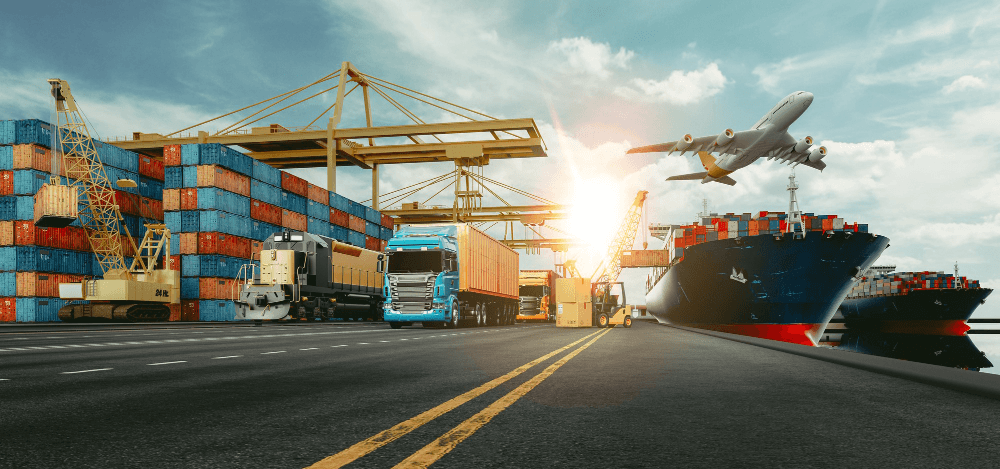
Additionally, the export process involves shipping arrangements and insurance operations when necessary. In order to deliver your products safely and efficiently to your target market, logistics companies to handle transport and storage must be selected and transport operations must be executed smoothly.
This process is one of the most important steps for foreign trade. Therefore, this stage of exporting includes completing customs procedures correctly, choosing an appropriate transport method, and insuring your products when necessary.
Post-Export: Customer Relations and Receiving Payments
The export process continues even after your products are sold in the target market. At this stage, managing customer relations and receiving payments properly is key. To ensure customer satisfaction and build long-term relationships, you need to focus on customer service.
Additionally, you need to collect payments from buyers on time. This maintains the financial health of your business and is essential for a sustainable exporting activity.
What are the Required Documents for Export?
The primary documents required for export procedures are as follows:
• Proforma/Commercial Invoice
• Consular invoice
• Original invoice
• Insurance certificate
• Freight invoice
• Packing list
• Package specification documents
• Bill of lading
• TIR carnet
• Delivery order (ordinance)
• Health certificate
• Standardization control certificate
Commonly Encountered Problems in Exporting and Suggested Solutions
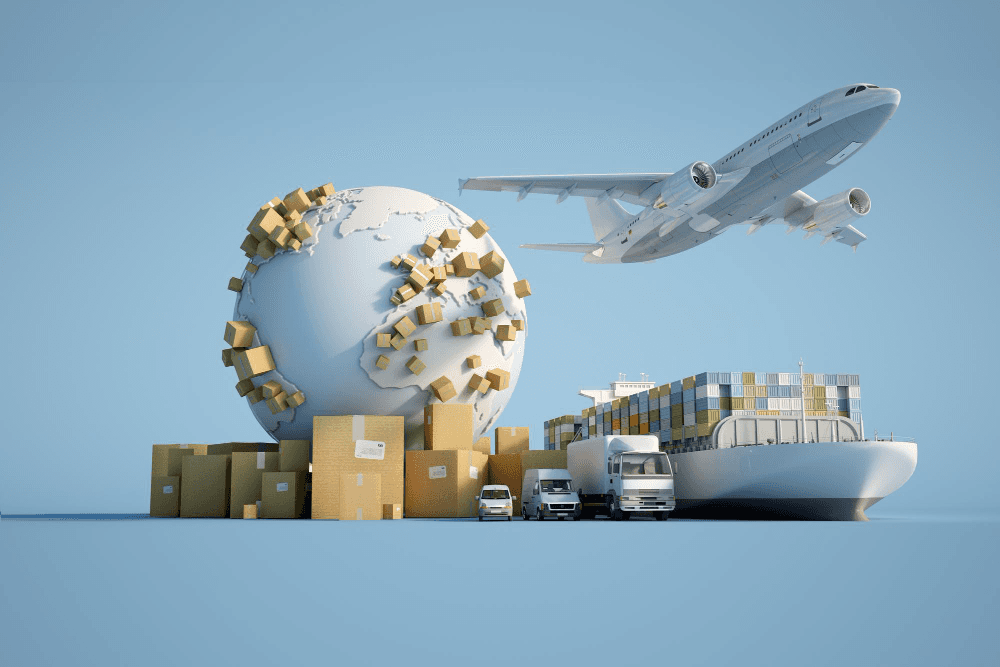
Securing delivery from Turkey to every country is more difficult than one might think. Therefore, shipping and customs issues represent one of the biggest challenges faced, especially in commercial export transactions.
The best solution to follow in the face of this problem could be studying foreign market projects in detail, researching different market costs, and comparing them with other competitors.
Payment and risk management issues in international export transactions are also among the highly common situations. Contracts must be made effectively and in detail against situations where the counterparty in trade does not make payments or does not pay as required.
In this way, it is possible to say that agreements made between the two countries will play an important role in eliminating risks in negative situations. Quality control consists of all procedures and techniques used during the fulfillment of all responsibilities regarding the quality of the products.
Therefore, it is possible to carry out accurate and hassle-free exports by obtaining support from quality organizations active in the international arena regarding quality control issues that may arise in exporting.