Summarize this text with artificial intelligence
Choose your preferred tool to generate a short summary of the text.
The logistics sector is constantly in search of more efficient and cost-effective solutions. In this continuous development process, certain strategies and methods stand out and help businesses increase their competitiveness.
Cross-docking is an important strategy that has gained popularity in the logistics field in recent years and helps businesses optimize their logistics processes.
In this blog post, we will examine what cross-docking is, its advantages, and its use in the logistics sector. Discover how you can use it to make your business's logistics processes more efficient and cost-effective.
What is Cross-Docking? 🤔
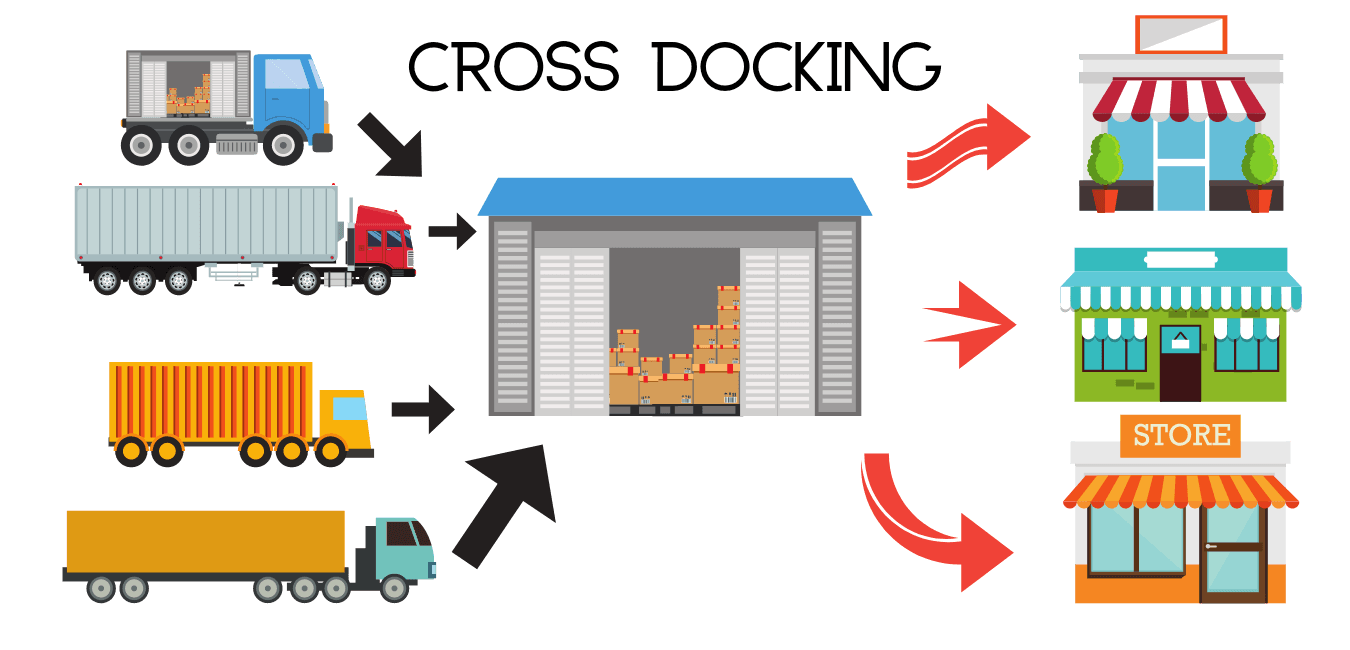
Cross-docking is a method in logistics processes where a product is received from the supplier and shipped directly to the customer or end-user with virtually no storage.
This process ensures that products reach the end-user faster and at a lower cost. The core principle of cross-docking is to increase efficiency by minimizing the transit time and storage costs of products.
Why is Cross-Docking Used?
By integrating into logistics processes, cross-docking allows businesses to both reduce their costs and increase customer satisfaction. Thanks to this method, products are delivered from supplier to customer more quickly, and the need for storage space is greatly reduced. It is widely used particularly in the retail, e-commerce, and consumer goods sectors.
4 Key Advantages of Cross-Docking 🚀
The cross-docking method offers significant advantages in the field of logistics and supply chain management. By using this method, businesses can shorten delivery times, reduce storage and inventory costs, optimize their processes, and ensure a more flexible supply chain management. Its most important advantages are as follows:
1. Rapid Delivery Times
It speeds up delivery times by minimizing the storage duration of products. Consequently, faster service can be provided to customers, increasing customer satisfaction. Furthermore, thanks to fast deliveries, businesses become more competitive in the market.
2. Reduction of Storage and Inventory Costs
With the cross-docking method, products are shipped directly to the customer with virtually no storage. This greatly reduces the need for storage space and inventory costs. Consequently, businesses lower their costs and can achieve higher profit margins.
3. Optimization of Business Processes
It is a method that requires continuous monitoring and analysis of logistics processes and inventory management. This ensures the optimization of business processes and contributes to businesses operating more efficiently and effectively.
4. Flexibility and Supply Chain Management
It enables businesses to be more flexible and dynamic in supply chain management. Thanks to this method, adaptation to changes in demand and market conditions can be achieved faster. Additionally, coordination and communication among suppliers, logistics service providers, and customers are strengthened, contributing to the success of supply chain management.

What are the Applications of Cross-Docking? 🌐
The cross-docking method can be used in many industries and processes. It is effectively applied in various areas ranging from retail and e-commerce sectors to production and distribution processes, international trade, and logistics services. Some of its areas of use can be shown as follows:
Use in Retail and E-Commerce Sectors
In the retail and e-commerce sectors, cross-docking ensures that products are delivered to customers more quickly and effectively. Thanks to shortened storage times and reduced inventory costs, businesses operating in these sectors offer more competitive prices, thereby increasing customer satisfaction.
Integration into Production and Distribution Processes
By integrating into production and distribution processes, it can increase the efficiency of these processes. Through cross-docking, manufacturers and distributors can achieve faster shipment of products and create a more flexible and effective structure in supply chain management.
Cross-Docking in International Trade and Logistics
In the field of international trade and logistics, the cross-docking method aims to accelerate customs procedures and reduce logistics costs by ensuring the direct shipment of products from one country to another. This increases the competitiveness of businesses in international trade, and logistics service providers offer more effective and efficient services.

How is Cross-Docking Planned and Managed? 🎯
Effective planning and management of cross-docking is critical to the success of logistics processes. There are many points to consider when managing these processes. We can briefly evaluate these points as follows:
Supply Chain Wizardry: Cross-Docking Integration 🧙♂️
Integrating cross-docking into supply chain management helps increase the efficiency and productivity of logistics processes. Thanks to this integration, businesses can reduce inventory costs and increase their competitiveness by providing faster service to customers.
Cross-Docking Empowered by Technology and Information Systems 🚀
The use of technology and information systems in the planning and management of cross-docking processes allows processes to be carried out faster, transparently, and without errors. Consequently, businesses can manage their logistics processes more effectively and increase their profitability by reducing costs.
Achieving Success: Performance Indicators and Continuous Improvement 📈
To implement cross-docking successfully, it is important to define performance indicators and adopt a continuous improvement approach. Consequently, businesses can constantly review their logistics processes and increase customer satisfaction by optimizing their performance.

What are the Challenges and Risks of Cross-Docking? ⚠️
Although cross-docking offers significant advantages for businesses, they may also face some challenges and risks. Those who will use this method should pay attention to the following issues:
Customs Labyrinth: Customs and Regulatory Requirements 🏛️
Particularly in international trade, it can encounter customs and regulatory requirements. Businesses must master customs regulations and provide appropriate documents and certificates to complete customs clearance quickly and accurately.
A Complex World: Supply Chain Management 🌐
It can increase the complexity of the supply chain and require businesses to implement a more careful planning and management process. Businesses must continuously monitor and improve supply chain processes to effectively manage cross-docking processes.
Team Game: Collaboration and Coordination Requirements 🤝
For the process to be successfully implemented, a strong collaboration and coordination are required among suppliers, carriers, customs brokers, and other logistics stakeholders. Businesses must ensure that processes are carried out faster and error-free by working in harmony with all stakeholders.
Successful Cross-Docking Strategies 🚀
Implementing and optimizing the system effectively can help businesses derive more benefits from their logistics processes. Some successful cross-docking practices include:
Collaboration with Business Partners and Suppliers 🤝
It is important for businesses to establish strong collaborations with suppliers, carriers, and other logistics stakeholders. These collaborations contribute to making supply chain processes more effective and efficient, assuring the successful execution of the process.
Continuous Analysis and Improvement 🔍
Processes must be continuously monitored, analyzed, and improved. By using performance indicators and analytical tools, businesses can identify weaknesses in the processes and increase success by providing continuous improvement.

Conclusion 🎯
Cross-docking plays an important role in the logistics industry and contributes to accelerating processes, lowering costs, and optimizing supply chain management. It is of great importance for businesses to adopt and effectively manage cross-docking practices in order to increase their competitiveness and ensure customer satisfaction.
For efficient and effective cross-docking operations, it is beneficial to focus on the following strategies:
• Establishing strong collaborations with business partners and suppliers
• Providing continuous analysis and improvement
• Learning best practices and success stories in the industry and adapting them to their own processes
In conclusion, the impact and importance of cross-docking in the logistics sector should not be ignored, and businesses can achieve sustainable success in the sector by making supply chain management more effective and efficient with successful systems.