Summarize this text with artificial intelligence
Choose your preferred tool to generate a short summary of the text.
Germany's Packaging Act (VerpackG) and LUCID Registration include a series of important regulations regarding nationwide waste management and the recycling of packaging waste. Understanding these two elements is of vital importance for all retailers, manufacturers, and importers operating in Germany.
The law mandates the proper treatment and recycling of packaging waste from products. The LUCID Register was also created to track and audit this process. In this article, we will examine the details you need to know about LUCID Registration.
What is VerpackG (Packaging Act)?
VerpackG is a law that concerns individuals who send packages to Germany. This law, which obligates those engaged in online trade activities, came into force on December 1, 1991. Additionally, the law replaced the preceding Packaging Ordinance. On January 1, 2019, the Packaging Act began to be implemented.
The law, which started to be applied on the aforementioned date, is constantly updated with regulations introduced every 1-2 years. The recent update regarding VerpackG took place on July 1, 2022. As of this date, performing license registration (LUCID registration) and obtaining a certificate has become a requirement.
The Packaging Act protects and supports the environment and, consequently, ecological integrity. For this purpose, the packaging waste of all packages entering Germany must be recycled in accordance with the regulations.
In the same way, packaging waste can also be disposed of. For these applications, certificate fees are collected from individuals to ensure the proper recycling of packaging. The commercial income obtained from a person who registers with LUCID also guarantees that the packaging is disposed of in an environmentally friendly manner.

What is the Purpose of the Packaging Act?
With VerpackG, Germany aims for fair competition. Goals such as supporting the conservation of natural resources and protecting the environment are also important for the Packaging Act. In addition, the following goals are within the scope of the relevant law:
• Supporting increased recycling rates,
• Making packaging with lower deposit values,
• Minimizing or preventing the environmental impact of packaging waste,
• Reducing the general waste agreement,
• Saving participants from unfair competition,
• Enabling fair price distribution among competitors,
• Contributing to a sustainable cycle in the packaging industry.
The Packaging Act makes manufacturers take responsibility for the entire life cycle. Preventing waste, providing recycling, and keeping raw materials within this cycle are also among the goals of the relevant law. Thus, companies' LUCID registration contributes to nature.
Who Does the Packaging Act Affect?
VerpackG is a law that covers companies sending packaged goods to Germany. This law also concerns online marketplace sellers.
The Packaging Act affects all domestic and international sellers engaged in sales activities in the country in question. If you are an e-commerce company selling here, you will also be subject to this law.
Regardless of whether they are general or individual, all materials used in packaging for various purposes are later considered waste. For example; hangtags, bags, boxes, and cardboard are waste.
At the same time, most of the materials used in transport (envelopes, boxes, wrapping) are also considered waste. In other words, when generalized, it applies to products that include the majority of packaging that can be classified as waste after use.
Along with the Packaging Act, glass packaging and coatings, natural materials, aluminum packaging, plastic, and carbon composite materials have also been included in these materials.
These packages, used under the Packaging Act, have been put into circulation for the first time in the German market due to commercial activity. However, these materials have been accounted for and made legal with the LUCID registration managed by the Central Agency Packaging Register (ZSVR).
After this legislative amendment, eligible packagings added include cardboards, glass packaging and coatings, aluminum packaging, natural materials, plastic, carbon composite materials, and more.

How to Register with LUCID?
In order to comply with the Packaging Act and its scope, registration with LUCID must be completed in the first place. This registration is extremely easy to complete. You can easily and quickly register through "ZSVR Verpackungsregister".
In other words, you must register in the "LUCID Packaging Register" section and obtain a registration number. Afterwards, a suitable certificate can be obtained from one of the dual systems.
The annual quota of packaging materials used in the system in question is determined. This way, the fees expected to be paid are also easily calculated. Additionally, the different available dual systems are as follows:
• BellandVision GmbH
• Zentek GmbH & Co. KG
• PreZero Dual GmbH
• Reclay Systems GmbH
• Recycling Dual GmbH
• INTERSEROH+ GmbH
• Veolia Umweltservice Dual GmbH
• Noventiz Dual GmbH
• Landbell AG für Rückhol-Systeme
• Altera System GmbH
• EKO-PUNKT GmbH & Co. KG
• Der Grüne Punkt (Duales System Deutschland GmbH)
Among these, Der Grüne Punkt is known to be the most preferred system. In this affordable system, the operations to be performed are carried out in an extremely practical manner.
The features offered by other options are also different and advantageous in their own right. In this sense, you should determine the dual system suitable for you before registering with LUCID. You should compare them all and choose the one that suits your company.
How to Get a LUCID ID Number?
As of July 1, 2022, LUCID registration has become mandatory to sell in Germany. You can follow the steps below to fulfill the requirements of the Packaging Act:
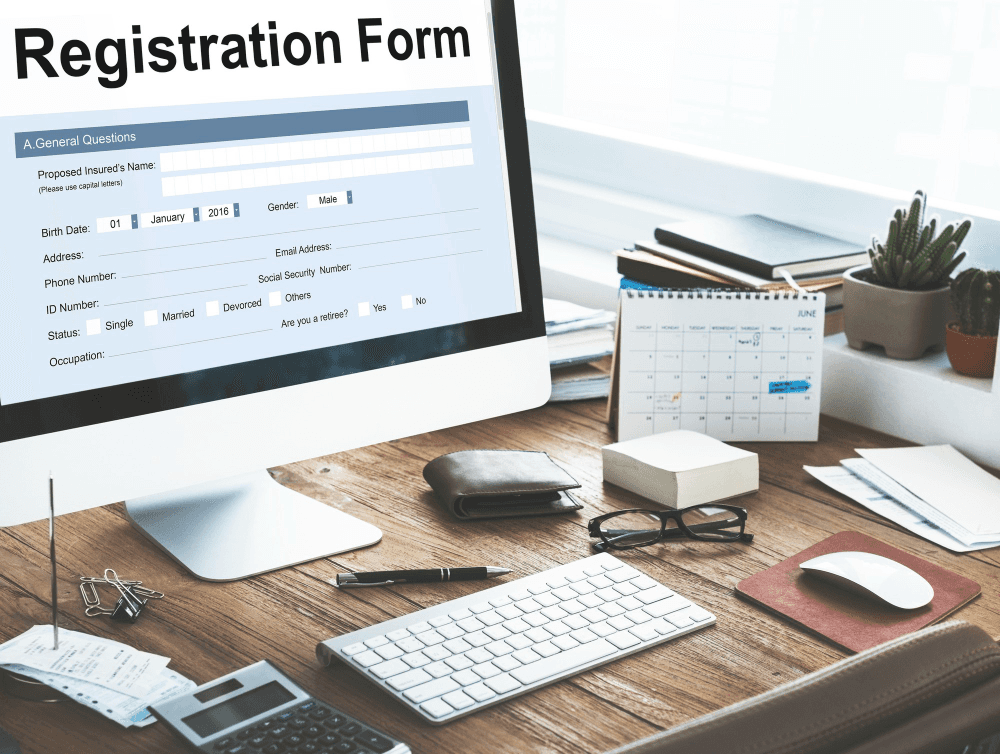
1. Register with LUCID
If you want to sell in Germany over the internet, you must register with LUCID. The first step you should follow is to register via the LUCID Packaging Register.
If you receive orders from any buyer within German borders, you are required to register with this system. Additionally, you must report this after registration.
2. Inform buyers about return and recycling points
After registering with LUCID, you need to inform your buyers about return and recycling. The updated Packaging Act makes sellers responsible in this regard.
This information can also be shared as an announcement message in the store on the marketplace where sales are made. For extra information, the LUCID registration website can be visited. In addition, you can obtain legal advice.
3. Register your LUCID ID number in the relevant marketplace
Most of the marketplaces request the relevant registration numbers for sellers and shops selling to Germany.
Even if they do not request it today, there is a high probability that they will request it in the coming days. Therefore, you should quickly create your registration and register your identification number in the relevant marketplace.

What is a LUCID Registration Number?
LUCID is subject to the Federal Environment Agency. A public register is maintained for all first distributors of sales packaging. Manufacturers and first distributors must record data on the packaging quotas of the dual systems.
The VerpackG Act states that every business considered a sales packaging manufacturer in the country concerned must register with the Central Office specified in the LUCID portal.
After the registration process, companies are included in the public register. This way, they receive a registration number which they must transmit to system partners.
What Needs to Be Done to Comply with the Packaging Act?
To comply with the Packaging Act, certain steps must be followed. The first of these steps is to obtain a suitable certificate.
To get a certificate, one must register with LUCID and request a certificate from a dual system. Thus, a suitable payment plan can be created by determining how much packaging will be used per year.
Once the certificate is obtained, the certificate number must be reported to the LUCID system. This process is very important for keeping accurate records.
The payment stage is carried out through the designated dual system. You must maintain the continuity of this payment certificate. Thus, you continue your compliance process with the laws.
The final step is to add the provided legal logo to your packaging. The logo shows that a certificate has been obtained for the packaging from an appropriate dual system. At the same time, this logo indicates compliance with the Packaging Act.

How to Make a Der Grüne Punkt License Payment?
You can make calculations based on the products in your package in the section that appears as "License Calculator" on the official site. This way, you can create an annual payment plan.
If you possess a product other than plastic or paper types, you can use the "Add Category" section for this. It is possible to view all product types from the relevant button.
By scrolling down the page, you can access the "Calculation Add" section, which offers automatic calculation based on box size. From this section, you can perform your payment by calculating plastic, paper, glass, and similar packaging according to their sizes.
For Which Packaging is a Certificate Required?
A certificate must be obtained for all packaging. Many packagings such as paper, cardboard, glass, ferrous metal, plastic, and beverage cartons require obtaining a certificate.
Additionally, composite (obtained by combining at least two materials) packagings are also included in the certificate. In other words, it is mandatory to obtain a certificate for every single material that protects products from external factors.
What Happens if You Do Not Comply with the Packaging Act?
There are many sanctions for not complying with the Packaging Act. If you are someone thinking about starting export newly, you should fulfill certain obligations by reviewing the laws of the country you plan to trade with.
The Packaging Act is a law specific to Germany. In other words, if you are an entrepreneur operating here, not complying with the rules of the law will be considered an administrative offense.
Since failing to comply with the law and not creating a LUCID registration is considered an administrative offense, there are sanctions such as a sales ban and monetary fines.
In addition to this, many situations such as incorrect quantity declaration, failure to declare the quantity in dual systems, or failure to obtain a license are considered offenses. Therefore, the penal practices applied are as follows:
• Written warning
• A fine of approximately 100,000 euros for the offense of selling unregistered products
• A fine of approximately 200,000 euros in case of non-participation in recycling systems
• Immediate sales ban applied if the payments for materials used in the dual systems are not made
When Should Products Be Licensed?
The appropriate period for licensing packaging within the scope of VerpackG is the beginning of the year. You should perform the registration of the packaging under the most favorable conditions in a calendar year. You can start the registration process by estimating the planned quantity.
Afterwards, you can calculate the amount to be paid in terms of type and weight. Once a year, at the beginning of the year, you must report retroactively for the past license year.
The relevant report is displayed in the recycling system. If information such as tax number, company, contact details, and similar info has changed during the year, you must certainly report this to the recycling system.
For the German Packaging Act, which has been in force since 2019, certain negotiations were finalized in 2021, and it was decided that the new law would come into force as of July 3, 2022.
Since this date, it has become mandatory for all individuals who will trade in Germany to carry out their activities by registering with LUCID.
After acquiring all the information, you are ready to sell in Germany. While selling, you need a right solution partner.
Therefore, after making your LUCID registration, you can get professional support from Navlungo for the international transportation activities you will carry out. We wish you great sales!