
Summarize this text with artificial intelligence
Choose your preferred tool to generate a short summary of the text.
Containers, which are one of the most important building blocks of international trade and logistics, are also highly significant in terms of their dimensions. Regardless of the transportation type, products can be transported quickly, safely, and effectively worldwide thanks to containers.
In this article, we will provide detailed information about container dimensions and all container sizes. Thus, everyone operating in or curious about the trade and logistics sector will be able to easily access the information they want.
Continue reading to step into the world of containers and discover different container sizes, types, and areas of use!
Basic Container Types
Basic container types are classified according to their dimensions, structure, and intended use. In addition, container capacities vary depending on the purpose of use. Standard containers are the most commonly used type of container. They are generally available in 20 and 40 feet lengths. High cube containers, on the other hand, are designed for higher volume cargo and are taller than standard containers.
Open top containers are useful for large and bulky cargo loaded by crane. Flat-rack containers can also be used for large and irregularly shaped cargo. Reefer containers allow chilled or frozen products to be transported in a temperature-controlled environment. Let's take a closer look at the details of these container types together.
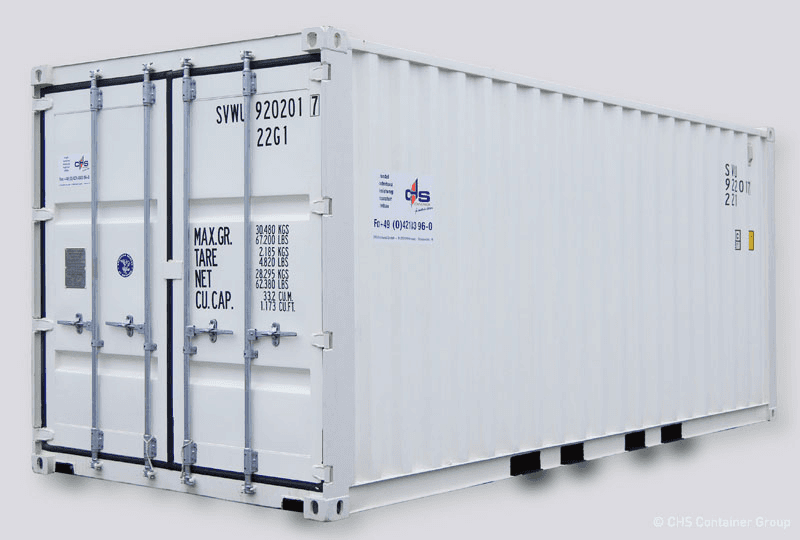
1. Standard Containers
Standard containers are container types with standardized dimensions that are widely used in the logistics and transportation sector worldwide. Standard containers are designed for transporting various materials such as palletized cargo, boxed products, and general cargo.
Standard containers are made of steel or aluminum material and have a robust and durable structure. These containers feature gaskets and locking mechanisms on their doors to protect cargo and ensure safe transport. Additionally, the standardized corner castings located at the corners of the containers allow them to be easily handled during loading, unloading, and stacking processes. Standard containers are considered one of the cornerstones of global transportation by offering flexibility and compatibility in the logistics sector.
20 ft. Standard Container
• External dimensions: Length 6,058 mm (20 feet), Width 2,438 mm (8 feet), and Height 2,591 mm (8.5 feet)
• Internal dimensions: Length 5,898 mm (19.4 feet), Width 2,352 mm (7.7 feet), and Height 2,393 mm (7.9 feet)
• Capacity: Approximately 33 cubic meters (1,170 cubic feet)
• Maximum payload weight (estimate): 28,000 kg - 30,000 kg (61,000 lbs - 66,000 lbs)
40 ft. Standard Container
• External dimensions: Length 12,192 mm (40 feet), Width 2,438 mm (8 feet), and Height 2,591 mm (8.5 feet)
• Internal dimensions: Length 12,032 mm (39.5 feet), Width 2,352 mm (7.7 feet), and Height 2,393 mm (7.9 feet)
• Capacity: Approximately 67 cubic meters (2,366 cubic feet)
• Maximum payload weight (estimate): 26,000 kg - 28,000 kg (57,000 lbs - 62,000 lbs)
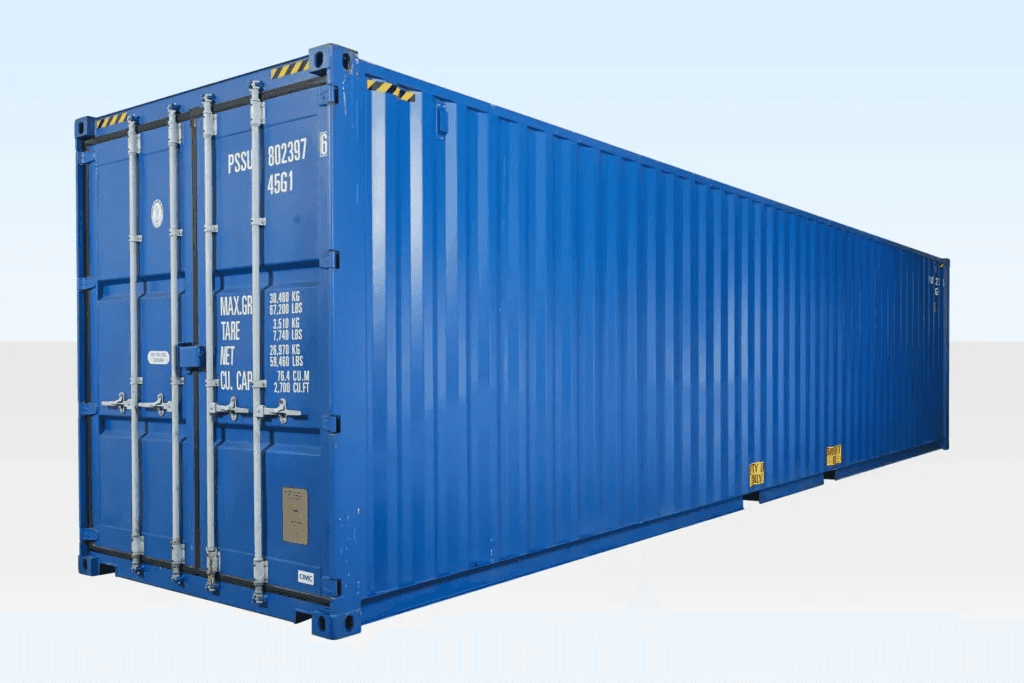
2. High Cube Containers
High cube containers are container types designed for transporting higher volume cargo compared to standard containers. These containers are preferred in the logistics and transportation sector to transport cargo with large volume but relatively low weight more efficiently and economically.
High cube containers are generally made of steel or aluminum material. With their robust and durable structure, they ensure the protection and safe transportation of cargo. Featuring gaskets and locking mechanisms on their doors, these air and water-tight containers help protect cargo from external factors.
40 ft. High Cube Container
• External dimensions: Length 12,192 mm (40 feet), Width 2,438 mm (8 feet), and Height 2,896 mm (9.5 feet)
• Internal dimensions: Length 12,032 mm (39.5 feet), Width 2,352 mm (7.7 feet), and Height 2,698 mm (8.9 feet)
• Capacity: Approximately 76 cubic meters (2,684 cubic feet)
• Maximum payload weight (estimate): Varies between 26,000 kg - 28,000 kg (57,000 lbs - 62,000 lbs).
45 ft. High Cube Container
• External dimensions: Length 13,716 mm (45 feet), Width 2,438 mm (8 feet), and Height 2,896 mm (9.5 feet)
• Internal dimensions: Length 13,556 mm (44.5 feet), Width 2,352 mm (7.7 feet), and Height 2,698 mm (8.9 feet)
• Capacity: Approximately 86 cubic meters (3,040 cubic feet)
• Maximum payload weight (estimate): Varies between 27,000 kg - 29,000 kg (59,000 lbs - 63,000 lbs).
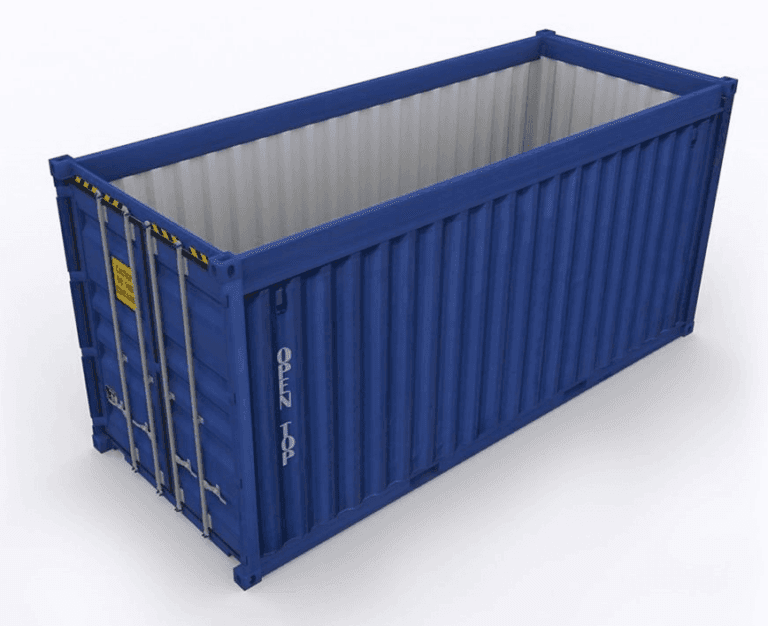
3. Open Top Containers
Open top containers are container types with an open top, designed specifically for transporting tall, bulky, or irregularly shaped cargo. In the transportation sector, open top containers are preferred for transporting special cargo suitable for loading and unloading from above with equipment such as cranes or forklifts. Additionally, as their tops are open, they are equipped with special tarpaulins and covers to protect the cargo against weather conditions.
20 ft. Open Top Container
• External dimensions: Length 6,058 mm (20 feet), Width 2,438 mm (8 feet), and Height 2,591 mm (8.5 feet)
• Internal dimensions: Length 5,898 mm (19.4 feet), Width 2,352 mm (7.7 feet), and Height 2,393 mm (7.9 feet)
• Capacity: Approximately 33 cubic meters (1,170 cubic feet)
• Maximum payload weight (estimate): 28,000 kg - 30,000 kg (61,000 lbs - 66,000 lbs)
40 ft. Open Top Container
• External dimensions: Length 12,192 mm (40 feet), Width 2,438 mm (8 feet), and Height 2,591 mm (8.5 feet)
• Internal dimensions: Length 12,032 mm (39.5 feet), Width 2,352 mm (7.7 feet), and Height 2,393 mm (7.9 feet)
• Capacity: Approximately 67 cubic meters (2,366 cubic feet)
• Maximum payload weight (estimate): 26,000 kg - 28,000 kg (57,000 lbs - 62,000 lbs)
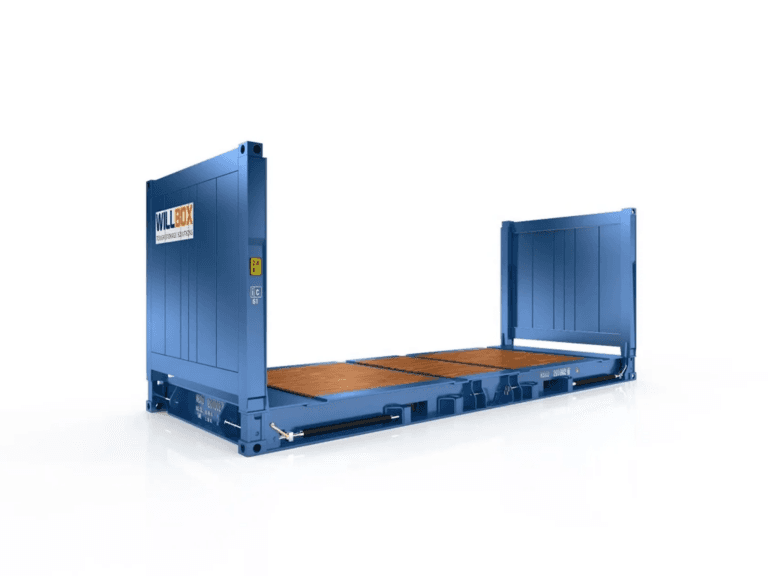
4. Flat-Rack Containers
Flat-rack containers are container types that do not have side and front walls, or have collapsible walls, specifically designed for transporting large, heavy, and irregularly shaped cargo. These containers are preferred in the logistics and transportation sector to safely and effectively transport cargo with dimensions that would not fit in standard containers.
There are also models of flat-rack containers with collapsible walls. These models take up less space when not in use and help reduce transportation or storage costs.
20 ft. Flat-Rack Container
• External dimensions: Length 6,058 mm (20 feet), Width 2,438 mm (8 feet), and Height 2,591 mm (8.5 feet)
• Capacity: The capacity of these containers varies depending on the dimensions and weight of the transported cargo.
• Maximum payload weight (estimate): 20,000 kg - 25,000 kg (44,000 lbs - 55,000 lbs)
40 ft. Flat-Rack Container
• External dimensions: Length 12,192 mm (40 feet), Width 2,438 mm (8 feet), and Height 2,591 mm (8.5 feet)
• Capacity: The capacity of these containers varies depending on the dimensions and weight of the transported cargo.
• Maximum payload weight (estimate): 35,000 kg - 45,000 kg (77,000 lbs - 99,000 lbs)
5. Refrigerated (Reefer) Containers
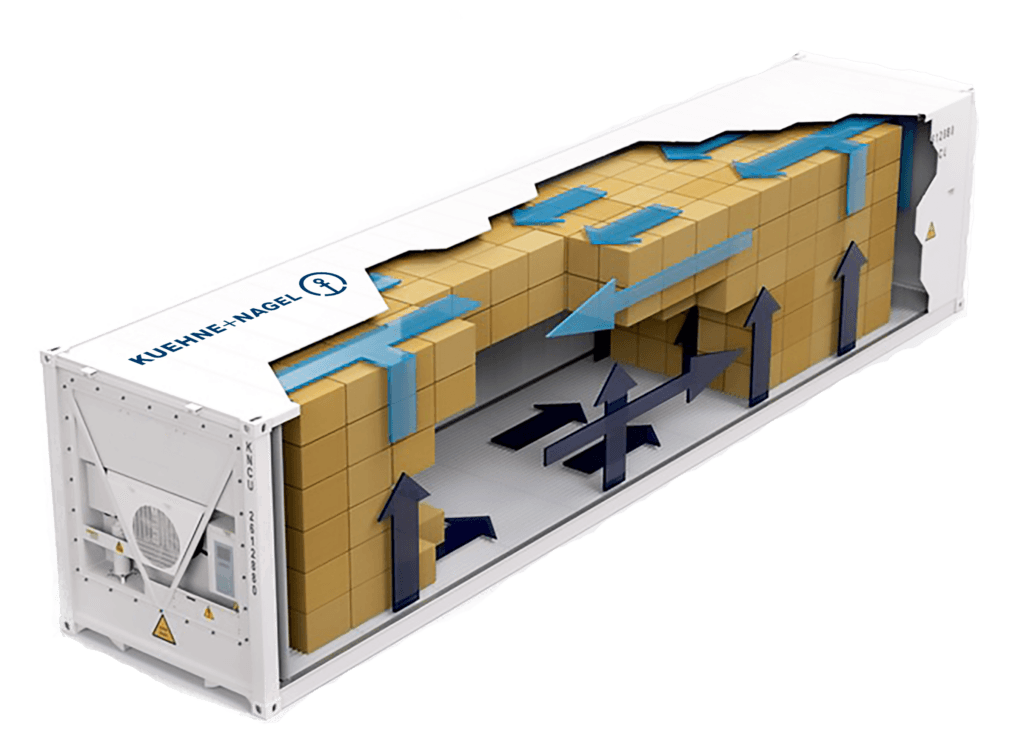
Refrigerated, also known as reefer containers, are container types designed for transporting sensitive products such as food, medicine, and chemicals thanks to their temperature-controlled feature. Refrigerated containers are preferred in the logistics and transportation sector to ensure that products are transported in a fresh, safe, and undamaged manner.
The external structures of refrigerated containers are generally made of steel or aluminum material, while high-insulation materials are used on the internal surfaces. In this way, the desired temperature and humidity levels inside are maintained regardless of the temperature changes in the external environment. Furthermore, these containers are usually equipped with electrical cooling units and are operated by connecting to appropriate energy sources.
Reefer containers contribute to preserving product quality and freshness periods in the logistics sector by offering a safe and effective solution for transporting temperature-sensitive products. Thanks to this, businesses can increase customer satisfaction and maintain their competitiveness in the global market.
20 ft. Refrigerated Container
• External dimensions: Length 6,058 mm (20 feet), Width 2,438 mm (8 feet), and Height 2,591 mm (8.5 feet)
• Internal dimensions: Length 5,455 mm (17.9 feet), Width 2,294 mm (7.5 feet), and Height 2,276 mm (7.5 feet)
• Capacity: Approximately 28 cubic meters (989 cubic feet)
• Maximum payload weight (estimate): 27,000 kg - 29,000 kg (59,000 lbs - 63,000 lbs)
40 ft. Refrigerated Container
• External dimensions: Length 12,192 mm (40 feet), Width 2,438 mm (8 feet), and Height 2,591 mm (8.5 feet)
• Internal dimensions: Length 11,590 mm (38 feet), Width 2,294 mm (7.5 feet), and Height 2,276 mm (7.5 feet)
• Capacity: Approximately 60 cubic meters (2,120 cubic feet)
• Maximum payload weight (estimate): 26,000 kg - 28,000 kg (57,000 lbs - 62,000 lbs)
Container Dimensions and Capacities
Container dimensions and capacities vary among different container types depending on the type and size of the cargo to be transported. Containers are widely used in international trade and logistics, offering customized solutions for various sectors. Here is general information about container dimensions and capacities:
Container Type | Length | Width | Height | Capacity |
20 feet Standard | 6,058 mm | 2,438 mm | 2,591 mm | 33 cubic meters (1,170 cubic feet) |
40 feet Standard | 12,192 mm | 2,438 mm | 2,591 mm | 67 cubic meters (2,366 cubic feet) |
40 feet High Cube | 12,192 mm | 2,438 mm | 2,896 mm | 76 cubic meters (2,694 cubic feet) |
45 feet High Cube | 13,716 mm | 2,438 mm | 2,896 mm | 86 cubic meters (3,040 cubic feet) |
20 feet Open Top | 6,058 mm | 2,438 mm | 2,591 mm | 32 cubic meters (1,130 cubic feet) |
40 feet Open Top | 12,192 mm | 2,438 mm | 2,591 mm | 64 cubic meters (2,260 cubic feet) |
20 feet Flat-Rack | 6,058 mm | 2,438 mm | 2,591 mm | Depends on cargo dimensions/weight |
40 feet Flat-Rack | 12,192 mm | 2,438 mm | 2,591 mm | Depends on cargo dimensions/weight |
20 feet Refrigerated (Reefer) | 6,058 mm | 2,438 mm | 2,591 mm | 28 cubic meters (989 cubic feet) |
40 feet Refrigerated (Reefer) | 12,192 mm | 2,438 mm | 2,591 mm | 60 cubic meters (2,120 cubic feet) |
Note: The dimensions and capacities in the table are approximate values and may vary slightly depending on the container manufacturers.
What is the Role of Container Dimensions in Logistics?
In logistics, container dimensions are influential on transportation costs and loading-unloading processes. Within this scope, it can be said that container dimensions help optimize transportation costs. Because the most convenient one can be selected from containers with different sizes and volumes based on the quantity and type of transported cargo. Thus, cargo is carried more efficiently.
Furthermore, the standardization of container dimensions accelerates and simplifies loading and unloading processes. Metric container sizes offer a compatible structure for transport vehicles and infrastructure such as ports, ships, trains, and trucks. This system, which allows containers to be handled and transported quickly and effectively regardless of their weights, saves both time and labor in loading and unloading processes.
Selection and Use of Container Dimensions
The selection and use of containers are of great importance in terms of the efficiency and cost-effectiveness of logistics processes. Choosing the right container based on needs and utilizing special container types for special purposes save both time and money.
When selecting a container based on needs, the type, size, and weight of the cargo to be transported must be considered. While standard containers are highly suitable for general cargo and palletized loads, high cube containers can be preferred for light and voluminous cargo. At this point, the right decision can be made by comparing 20 ft container dimensions and 40 ft container dimensions. In this way, more cargo can be transported inside the container, reducing transportation costs.
Using special container types for special purposes, on the other hand, provides a more appropriate and safe solution. For example, reefer containers should be preferred for transporting chilled or frozen products. Reefer containers help preserve the quality and freshness of products by providing a temperature-controlled environment.
For large and irregularly shaped cargo, flat-rack containers might be preferred. Since this type of container does not have side and front walls, or has collapsible walls, it allows large and heavy loads to be loaded easily and transported safely.
Final Words on Container Dimensions
The importance of container dimensions in the logistics sector and the selection of the correct container dimensions play a vital role in terms of efficiency and cost-effectiveness. The efficiency of transportation and logistics processes is directly related to using the correct container type and size. Standardized container dimensions create value across all layers of the sector by accelerating loading and unloading processes, lowering transportation costs, and providing labor savings.
The use of appropriate container types for special needs and cargo types ensures that cargo is transported safely, quickly, and economically. This helps businesses gain a competitive advantage by increasing the efficiency and cost-effectiveness of logistics processes. Whether you are a professional or a small business operating in the field of transport and logistics, having knowledge about container dimensions and types is critical for your success and sustainability.