
Summarize this text with artificial intelligence
Choose your preferred tool to generate a short summary of the text.
The limit of carrying capacity, when viewed as a whole, is the boundary that determines the total passenger and cargo capacity of all land and sea transport vehicles. Although it is not limited solely to logistics transport, private and commercial vehicles also have a carrying capacity limit. If the carrying capacity limit, which applies to all motor vehicles, is exceeded, penal action is taken against the driver of the vehicle.
In Article 128 of the Highways Traffic Regulation, the carrying capacity limit is explained in detail for all vehicles, and it is a rule enacted to ensure that passengers or cargo proceed more safely on their route. All companies serving in the logistics sector must pay attention to the carrying capacity limit when loading. So, "What is the carrying capacity limit for trucks and tractor-trailers in freight transport?" You can find the answer to this question in our blog post.
What is Carrying Capacity?
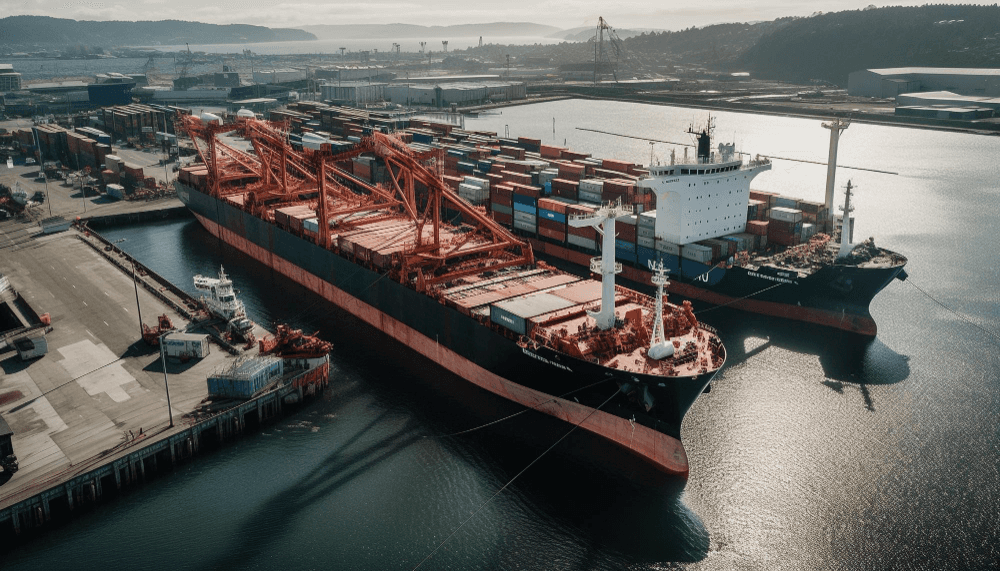
Carrying capacity represents the maximum weight that ships and containers can carry. From this perspective, it can be said to determine the limit of the amount of cargo that can be transported safely. Thus, carrying capacity minimizes the risks and safety issues that may be encountered during the transportation process.
In order for ships and containers to transport their cargo safely, the carrying capacity limit must not be exceeded. Otherwise, maritime safety risks, ship accidents, equipment damage, and environmental disasters may occur. Therefore, calculating and applying the carrying capacity correctly ensures that logistics processes are carried out smoothly and effectively.

What is the Carrying Capacity Limit for Trucks and Tractor-Trailers?
The carrying capacity limit is different for each vehicle type and the carrying capacity of that vehicle. For this reason, the limits within which vehicles can carry cargo safely are determined according to their capacity. In this way, vehicles are planned to continue their journey more safely. The carrying capacity limitation of tractor-trailers and trucks is of high importance particularly for transport companies. The carrying capacity limitation is as follows for trucks and tractor-trailers:
• Two-Axle Motor Vehicles: 18 tons
• Three-Axle Motor Vehicles: 25 tons
• Three-Axle Semi-Trailer Vehicles: 28 tons
• Articulated Buses: 28 tons
• Four-Axle Vehicles: 36 tons
• Semi-Trailer Axle Group Weight 20-ton Vehicles: 38 tons
• Semi-Trailer and Trailer Trains with Five or More Axles: 40 tons
• Vehicles Carrying Semi-Trailer Containers: 44 tons
Carrier and logistics companies must load in accordance with the vehicle type to prevent all problems that may be experienced during shipment. Depending on the type, brand, or model of the vehicles, carrying capacity limitations may also vary. The most accurate information that can be obtained on this matter is available in the registration document of the vehicle to be transported, and on the registration document, one can have the most accurate information about the total carrying capacity of the vehicle.

Why is Carrying Capacity Important?
Carrying capacity is highly important in terms of safety, cost, operational efficiency, environmental impact, and legal compliance. The details of these points can be listed as follows:
• A ship or container loaded beyond its carrying capacity causes safety risks at sea. Therefore, correct application of carrying capacity is important to ensure safety in maritime transport.
• Optimizing carrying capacity reduces transport costs by allowing more cargo to be carried with fewer trips.
• Ships and containers carrying cargo in accordance with the carrying capacity ensure faster and more efficient shipment processes. This leads to improvement in freight times and logistics processes.
• It helps reduce the environmental impact of maritime transport. Overloaded ships consume more fuel and cause more greenhouse gas emissions. By complying with the carrying capacity, fuel consumption and emissions can be reduced.
• International maritime regulations and rules require ships and containers to comply with their carrying capacity. Ships and containers that do not comply with the carrying capacity may face fines and legal issues.

How is Carrying Capacity Calculated?
The carrying capacity calculation depends on the structural features, dimensions, and design of the ship or container. Here are the basic factors to be considered in calculating the carrying capacity:
• Tare (unladen) weight of the ship or container: Indicates how much weight the ship or container itself has without any cargo, including engines, fuel, and other equipment. This value forms the basis of the carrying capacity calculation.
• Cargo carrying capacity: Indicates the amount of cargo that the ship or container can carry safely. This value varies according to the structural features and design of the ship or container and is an important component of the carrying capacity calculation.
The carrying capacity calculation is made by determining the difference between the empty weight of the ship or container and its cargo carrying capacity. The carrying capacity can be formulated as follows:
Carrying Capacity = Cargo Carrying Capacity - Unladen Weight
The calculation method we have provided is a general method used for ships and containers. Specific regulations and factors can be taken into account for different types of ships and containers. Therefore, we can say that carrying capacity calculation methods may vary according to the characteristics and needs of businesses.

How Much Are the 2023 Carrying Capacity Fines?
Carrying capacity fines in 2023 vary according to tonnage and by what percentage you exceed the weight limit. If you exceed the carrying capacity, the fine amount you will pay is as follows:
• Between 5% and 10%: If there is an overloading at these levels, a fine of 639 Turkish Liras is applied to the vehicle and the vehicle continues on its way.
• Between 10% and 15%: If there is an overloading at these levels, a fine of 1279 Turkish Liras is applied to the vehicle and the vehicle continues on its way.
• Between 15% and 20%: If there is an overloading at these levels, a fine of 1918 Turkish Liras is applied to the vehicle and the vehicle continues on its way.
• Between 20% and 25%: If there is an overloading at these levels, a fine of 2560 Turkish Liras is applied to the vehicle and the vehicle continues on its way.
• Overloading above 25%: If there is an overloading at this level or more, a fine of 3839 Turkish Liras is applied to the vehicle and the vehicle is banned from traffic until the cargo is made suitable for the road.
The Impact of Carrying Capacity on Transportation Costs
Carrying capacity capacity optimization affects logistics and transportation costs in many aspects such as fuel consumption, risk management, operational efficiency, and legal compliance. By determining the carrying capacity of ships and containers, it makes the logistics process more effective and efficient, thus reducing the carrying capacity cost. In addition, ships carrying cargo in accordance with the carrying capacity consume less fuel.
Correctly calculated and applied carrying capacity also minimizes the risks you may encounter in the logistics process, allowing you to manage risk appropriately. For example, because you show legal compliance, you will not encounter extra fines. In addition, because carrying capacity also impacts the transport process, you can achieve faster shipments. Thus, you will not experience any mishaps at the stage where your cargo is to be delivered.

Carrying Capacity and Maritime Safety
When carrying capacity is not applied, marine accidents and marine pollution are inevitable. Because ships or containers carrying cargo above their safe carrying capacities experience stability issues. These stability problems also increase the risk of marine accidents. Ships loaded with excess cargo may capsize, face the danger of sinking, or collide with other ships. As a result of such marine accidents, it is inevitable to experience both financial and moral losses. In addition, the accidents that occur cause fuel leaks, damaging the marine ecosystem.
Failure to comply with the carrying capacity also causes environmental problems by causing marine pollution in addition to marine accidents. Heavily loaded ships consume a lot of fuel and cause greenhouse gas emissions to increase. Therefore, carrying capacity must be complied with to protect maritime safety and the marine ecosystem.
Carrying Capacity and International Regulations
Carrying capacity and international regulations are highly important for safe and sustainable operations in the maritime industry. Regulations made by international maritime organizations make it mandatory for ships and containers to comply with the carrying capacity. Prominent maritime regulatory organizations include the International Maritime Organization (IMO), Maritime Classification Societies, and the International Maritime Employers' Council (IMEC). These organizations establish and enforce standards by issuing regulations related to carrying capacity to ensure safety and sustainability.
In particular, the IMO's International Load Line Convention and the 1966 Load Line Protocol include regulations related to carrying capacity. This convention regulates the use of carrying capacity and related marks to determine the structural safety and cargo carrying capacities of ships.
The importance of complying with carrying capacity regulations is emphasized in reports and studies published by the IMO and other international maritime organizations. For example, the IMO's report titled "Marine Pollution and Carrying Capacity" demonstrates how the implementation of carrying capacity regulations is effective in reducing marine pollution (source: IMO).
Complying with the carrying capacity gains prestige in the international arena, making it possible to be a reliable service provider worldwide. Therefore, complying with international regulations is extremely important both for the growth of the maritime transport sector and for the protection of global marine ecosystems.
When regulations are not complied with, serious consequences may be faced. Fines, legal problems, and loss of reputation can be counted among these negative consequences. Therefore, it is of great importance for maritime companies to comply with carrying capacity regulations and to take the necessary steps to manage their businesses accordingly.

Our Final Words on Carrying Capacity
Carrying capacity is important in the maritime and transport sector as it is a critical factor in issues such as safety, environmental sustainability, and cost optimization. Making accurate carrying capacity calculations ensures that ships operate safely and efficiently, minimizing loss of life and property. In addition, acting according to cargo capacity optimizes operating costs by reducing fuel consumption. Thanks to the carrying capacity which also helps prevent marine pollution, the marine ecosystem is protected. By complying with the carrying capacity, you can both increase the success of your business and help protect the health of marine ecosystems.
You can click on the link to read our article on sustainable supply chain.