Summarize this text with artificial intelligence
Choose your preferred tool to generate a short summary of the text.
Different trailer types are used for the transportation of various goods and materials in the transport industry. Selecting the correct trailer type ensures that the cargo is transported safely, costs are optimized, and logistic processes are more efficient.
In this article, we will examine the most suitable trailer types for transportation. You will also get information about the advantages, disadvantages, and application areas of each trailer type. This way, by identifying the correct trailer type, you will have the chance to manage your logistics process more effectively. Let's get started then! ⬇️
Main Trailer (Dorse) Types
The main trailer types can be listed as standard dry van trailer, enclosed box trailer, low bed (lowbed) trailer, refrigerated (reefer) trailer, tanker trailer, flatbed trailer, and side dump trailer.
These trailer types have specific features and structures to meet the different requirements of the industry. Businesses and logistics professionals can choose the most suitable trailer type based on the characteristics, volume, weight, and other requirements of the cargo to be transported.
1. Standard Dry Van Trailer 👇
The standard dry van trailer is one of the most widely used trailer types in the transportation sector. It is generally preferred in the retail, manufacturing, and distribution industries. Its application areas include dry food products, construction materials, furniture, electronics, and packaged consumer goods.
The advantages of a Standard Dry Van Trailer are as follows:
• It is designed to transport large quantities of cargo and has a spacious internal volume.
• It ensures that the cargo is protected from external elements such as sun, rain, and wind.
• Thanks to the doors located at the rear of dry van trailers, loading and unloading goods is easy and fast.
The disadvantages of a Standard Dry Van Trailer are as follows:
• It is not suitable for transporting temperature-sensitive goods because its internal temperature cannot be controlled.
• Dry van trailers are only suitable for products that can be loaded and unloaded through the rear door. Side or top loading is not possible.
2. Enclosed Box Trailer 🔒
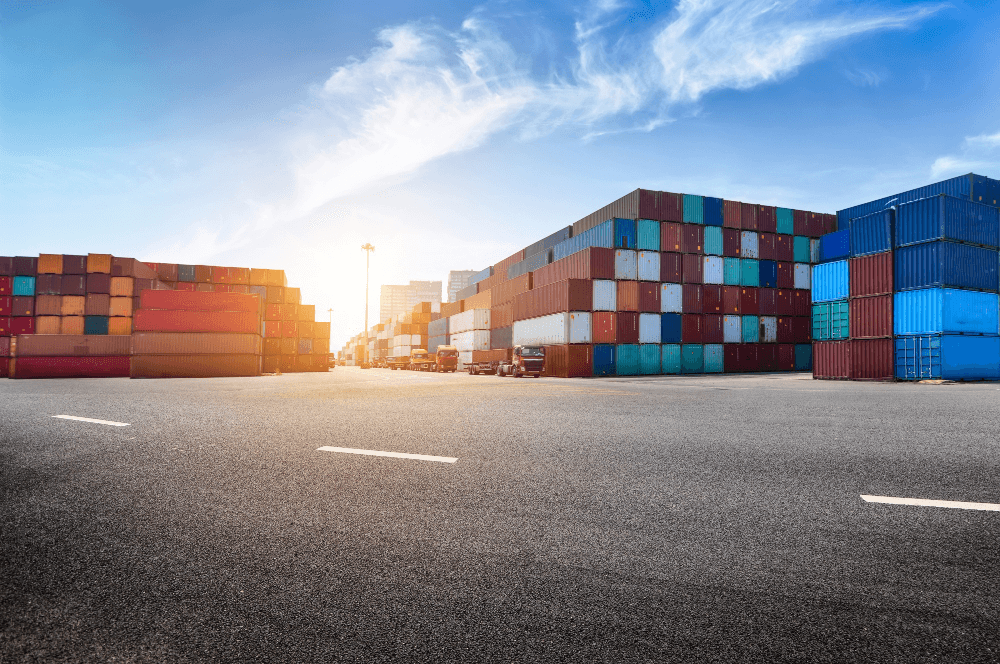
The enclosed box trailer is a type of trailer with a sturdy structure that protects the cargo from external elements and is used across various sectors. This trailer type offers features similar to standard dry van trailers. Its application areas include electronics, white goods, clothing and textiles, packaged food products, delicate equipment, and machinery.
Its advantages can be listed as follows:
• Thanks to its robust structure, it protects loads from impacts, moisture, dust, and other external factors.
• These trailers have a large internal volume to transport high quantities of cargo.
• Enclosed box trailers offer better security to protect goods against theft and vandalism.
Its disadvantages can be listed as follows:
• It lacks temperature control. Therefore, temperature-sensitive goods cannot be transported.
• It has loading and unloading limitations.
3. Low Bed (Lowbed) Trailer 🛏️
Low bed trailers are specially designed for transporting heavy and oversized cargo. Due to their low height, these trailers are ideal for loads that cannot be carried by other trailer types due to height restrictions.
Construction equipment and machinery, agricultural machinery, mining equipment, wind energy components, and oversized industrial equipment are among its areas of application.
The advantages of Low Bed Trailers are:
• It can transport much larger and heavier loads compared to other trailer types.
• Thanks to their low height, they offer the ability to transport in areas with height restrictions.
• Low bed trailers provide the capability to transport cargo of different shapes and sizes.
The disadvantages of Low Bed Trailers are:
• Since heavy loads are transported, loading and unloading processes may be slower compared to other trailer types.
• Because low bed trailers are large and heavy, maneuvering while driving can be more difficult.
• Due to their special design and carrying capacities, they can be more expensive compared to other trailer types.
4. Refrigerated (Reefer) Trailer ❄️🥶
Refrigerated trailers are designed specifically for products that must be transported in a temperature-controlled environment. These trailers are used to transport temperature-sensitive food, pharmaceuticals, and chemical products.
Its advantages can be listed as follows:
• It provides temperature control to maintain the quality and freshness of the transported goods.
• It can be used to transport a wide variety of goods by complying with legal regulations and standards required for the transport of temperature-sensitive items.
Its disadvantages can be listed as follows:
• Energy consumption and maintenance costs are higher compared to other trailer types.
• Because temperature control systems occupy space, the load capacity of refrigerated trailers is more limited compared to other types of trailers.
• The noise generated during the operation of refrigeration units can be disturbing in some cases and may be subject to environmental restrictions.
5. Tanker Trailer 🫠
Tanker trailers are specially designed for transporting liquid and gas form products. They are used to transport various liquid and gas goods such as chemical products, foodstuffs, and fuels.
The advantages of Tanker Trailers are:
• Designed for the safe and efficient transportation of liquid and gas products.
• Allows the transportation of large quantities of liquid and gas products.
• The design of tanker trailers minimizes the risk of spills and leaks, ensuring the safe transport of products.
The disadvantages of Tanker Trailers are:
• The use of tanker trailers requires high standards of cleanliness and maintenance.
• They can only be used for transporting products in liquid and gas form. Therefore, their areas of use are more limited compared to other trailer types.
• Unloading can take time and in some cases, may require special equipment. This can extend operational times and increase logistics costs.
6. Flatbed Trailer 🪨⚖️
Flatbed trailers have a flat surface and are open. They are used for transporting large, heavy, or irregularly shaped loads. They are preferred for transporting a wide variety of goods such as construction materials, containers, and heavy machinery.
Its advantages can be listed as follows:
• Flatbed trailers are perfect for carrying large and heavy loads, and their carrying capacities are quite high.
• Their open design provides easy access for loading and unloading.
• They can be used to transport irregularly shaped loads.
Its disadvantages can be listed as follows:
• Since cargo transported on flatbed trailers is exposed to weather conditions and other external factors, it is important to take appropriate packaging and securing measures.
• Transporting heavy and irregularly shaped loads requires strict supervision, especially during speed and route changes.
• Carrying volume is limited, and the height and width of the goods can affect the load capacity.
7. Side Dump Trailer 🧺⛏️
Side dump trailers feature a side-unloading design. They are generally used in the construction, mining, and agricultural sectors. These trailers allow materials to be unloaded quickly and efficiently. Construction projects and materials, mining and sand-gravel transport, agricultural products and waste, soil, wood chips, and other bulk cargo can be transported with a side dump trailer.
Advantages of Side Dump Trailers:
• The side-unloading feature ensures that loads are discharged quickly and efficiently.
• The stability and safety of the trailer during the side-unloading process is higher compared to other bulk-carrying trailer types.
• It offers a more sustainable and environmentally friendly solution for carrying bulk cargo.
Disadvantages of Side Dump Trailers:
• Carrying capacity may be lower compared to other trailer types.
• Since they are aimed at transporting bulk cargo, their application areas are more limited compared to other trailer types.
• The production and maintenance of side dump trailers can be more costly compared to other trailer types.
The Role of Trailer Types in Transportation
The role of trailer types in transportation significantly affects both transportation costs and loading/unloading processes. In terms of their impact on shipping costs, each trailer type has different load capacities, dimensions, and areas of use.
Therefore, choosing the most suitable trailer type for the products and materials to be transported can significantly reduce transportation costs. For example, low bed trailers are ideal for heavy and bulky loads.
In terms of their impact on loading and unloading processes, each trailer type has different features. Some trailer types are designed with special layouts and mechanisms to speed up loading and unloading operations.
For example, side dump trailers enable the fast and efficient discharge of bulk cargoes thanks to their side-unloading design. This speeds up the loading and unloading processes, improving logistical efficiency and maximizing the advantages that businesses can gain from their transportation processes.
Selection and Use of Trailer Types
Trailer selection is a critical factor determining the efficiency and success of logistical processes. Choosing a trailer that meets your needs helps ensure the transport process is carried out smoothly and efficiently.
Choosing a trailer based on needs requires considering factors such as the type, size, weight of the product to be transported, and the shipping distance. For example, side dump trailers are usually preferred for transporting bulky cargoes like construction materials or gravel. Container chassis trailers, on the other hand, are generally used to transport standardized cargo and containers.
Selecting an appropriate trailer type can significantly increase the efficiency of logistical operations. The right trailer speeds up loading and unloading processes by ensuring the cargo is transported safely and effectively. This can make the transport process more efficient overall.
It can also reduce shipping costs, as it consumes less fuel and speeds up the transportation process. Therefore, trailer selection plays a key role in shipping and logistics processes and must be done carefully. 👈
Conclusion
In the transportation sector, trailer types are important in terms of efficiency, cost, and customer satisfaction. Since each transportation process has its own unique requirements and characteristics, selecting and using the correct trailer type helps businesses optimize their transport processes and reduce costs.
Choosing and using the right trailer type saves businesses time in their transportation processes and reduces their costs. This is a major advantage, especially in complex and costly processes like international shipping. Additionally, by using the appropriate trailer type, businesses increase customer satisfaction and ensure a sustainable transport process. 🥳🙌