Summarize this text with artificial intelligence
Choose your preferred tool to generate a short summary of the text.

While the integration of artificial intelligence technologies into e-commerce becomes deeper day by day, Amazon has added a new one to its innovations in this field: Interest. The new feature, which analyzes users' areas of interest to offer personalized product and content recommendations, aims to make the shopping experience more intuitive and smart. Amazon Interest seeks to predict what the user wants in advance by evaluating not only past shopping data but also browsing habits, search behaviors, and interaction history. If you are also wondering how Amazon's new artificial intelligence solution Interests works, what advantages it offers to the user, and how it will shape the e-commerce world in the future, let's take a look at the details together.
What is the Interests Feature and How Does It Work?
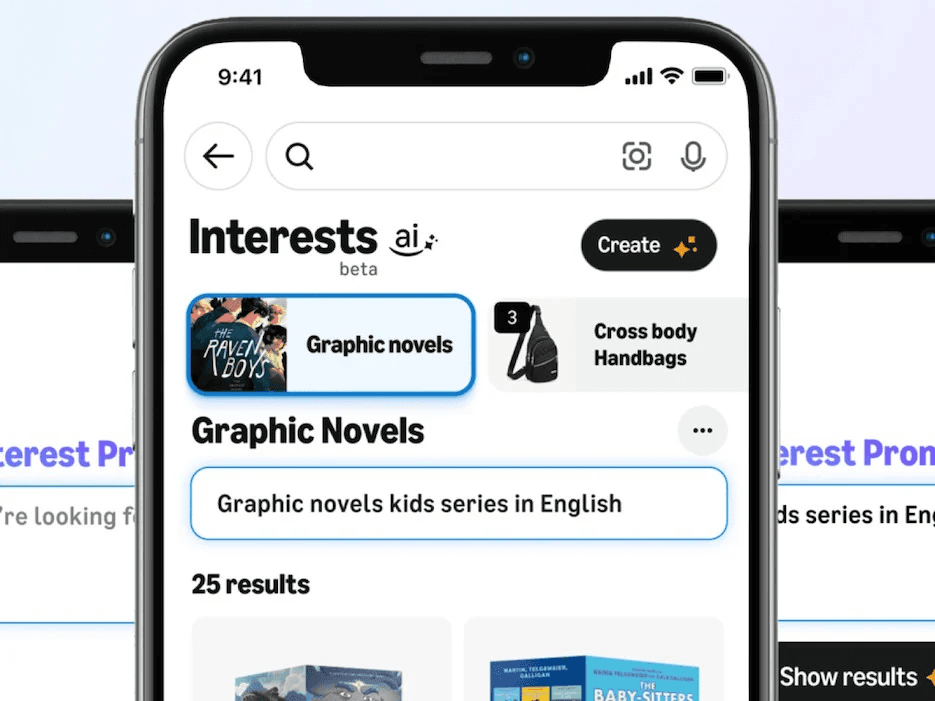
Amazon’s new AI-powered tool, Interests, was developed as a discovery engine that makes it easier for users to explore products they are interested in. Thanks to natural language processing technology, the feature allows users to express their needs in just a few sentences. For example, when a prompt like "I am looking for an affordable coffee maker with a simple design" is entered, the AI interprets this request and finds the most relevant products. This offers a more intuitive shopping experience beyond classic filtering and category browsing.
Since Interests runs on Large Language Models (LLM), it is capable of detecting context and user intent, rather than just matching words. Users can specify details in their prompts such as product type, category, price range, color, or purpose of use. This allows the search engine to list the best results tailored to personal needs. This contextual capability of the AI significantly improves the quality of the recommendations.
One of the most important features of the system is that it is not limited to showing only existing products. Even if a product with the specifications indicated by the user is not currently on sale, the system automatically generates a notification when it is added to Amazon's product stock. Consequently, the user is informed the moment the product comes into stock and can complete their purchase without delay.
Tested on Amazon’s US mobile application and mobile website, Interests is currently available to a limited group of users. However, the company plans to roll out this feature across the US shortly. Initial data shows that the user experience is evolving in a positive direction and that AI-enriched discovery engines are adding a new dimension to shopping.
A New Era of Visibility Begins for Sellers
Interests offers significant opportunities not only for users but also for sellers trading on Amazon. Especially sellers of niche products can reach the right target audience looking for their products faster, thanks to this feature. The AI-powered recommendation system increases visibility by highlighting products to interested customers.
The system creates an advantage during the launch process for sellers launching new products. If a customer is following a specific product category, this product is shown to the relevant customers as soon as it goes into stock. Thus, it becomes possible to reach the right customer without spending advertising budget. Additionally, Interests gives sellers the opportunity to analyze which product groups customers are interested in. This provides valuable data for product planning and stock management. More strategic decisions can be made by focusing on areas where demand intensifies.
This feature also offers a distinct advantage for companies engaged in e-export. It becomes possible to determine the products that overseas customers are interested in beforehand and present them to the market at the appropriate time. Interests demonstrates that AI-powdered commerce creates a transformation not only on the user side but also on the seller side.
Amazon’s AI Vision and Future Steps
Amazon continues to make a difference in the e-commerce world with many other AI projects besides Interests. Health-focused recommendation systems like Health AI make the shopping experience informative and guiding. At the same time, the AI-powered shopping assistant Rufus, which has started being tested in the European market, can offer instant recommendations to natural questions from users.
In addition, Amazon's system called Project PI prevents defective products from reaching the user by detecting damaged products in the warehouse before shipment. Project Amelia, developed for sellers, improves the quality of product descriptions by offering AI-powered content recommendations. When all these systems are considered as a whole, it is clear that Amazon positions AI not just as a tool, but as a core infrastructure element.
Interests draws attention as the newest step of this vision reflected to the user. Nowadays, when the purchase decision is shaped not only by price but also by timing, context, and personal needs, such features completely transform the user experience. Amazon’s AI integration also sets an example for other e-commerce platforms.
In the coming period, Interests is expected to expand to more markets and develop with multi-language support. Furthermore, it might become possible to process social media interactions or mobile app behavior within customized recommendations. All these developments show that a smarter, responsive, and personal shopping era has begun in e-commerce.
Amazon’s AI-powered Interests feature is a step that completely reshapes the shopping experience for both users and sellers. Thanks to innovative functions such as natural language use, personalized notifications, and stock tracking, users can express their needs more accurately and reach the product they want in the shortest time. For sellers, strategic advantages such as increased visibility and direct access to the target audience are offered. These developments not only materialize Amazon's AI vision but also clearly demonstrate how crucial personalization and automation have become in the future of e-commerce.