Summarize this text with artificial intelligence
Choose your preferred tool to generate a short summary of the text.
A new customs duty regulation directly concerning sellers making e-commerce shipments from Turkey to European Union countries will come into force on July 1, 2026.
Starting from this date, the 150 EUR customs duty exemption used for years on low-value e-commerce shipments entering the EU will end, and instead, a flat customs duty of 3 EUR for small packages will take effect.
In this article, we outline step-by-step what the flat 3 EUR customs duty introduced by the European Union means, what the abolition of the 150 EUR exemption represents in practice, how the new data and Product Identifier (PID) requirements could affect sellers, and how brands working with Navlungo should adapt their pricing, delivery terms (DDP / DAP), and operations.
What Does the New Regulation Bring?
Starting July 1, 2026, the European Union is abolishing the customs duty exemption currently applicable to e-commerce shipments under 150 EUR and is introducing a flat customs duty of 3 EUR per HS code for these small packages.
This flat duty will apply to each product line or product group contained in small shipments under 150 EUR and will be used as a "bridging regulation" from 2026 to 2028 during the EU's transition to a new customs data hub and permanent tariff structure.
The objectives behind this regulation include managing the rapid growth in low-value package volume, reducing risks such as incorrect or under-declared values, strengthening product safety, and creating a more balanced competitive environment between EU-based and third-country sellers.
The European Commission and EU member states approved this change as part of the EU's comprehensive Customs Reform program. Current industry guidance indicates that a temporary, simplified customs duty mechanism will be applied while the EU develops its new Customs Data Hub infrastructure. However, some implementation details are still in the process of being finalized by customs authorities and industry stakeholders. Therefore, while sellers must accept that the legal direction is clear, it is highly important that they closely follow the technical implementation steps.
Are Shipments from Turkey Covered?
Yes. Since Turkey is not an EU member, B2C small packages going from Turkey to EU countries like Germany, France, the Netherlands, Italy, and Spain are classified as "non-EU small shipments."
Consequently, e-commerce packages originating from Turkey, sent directly to the final consumer (B2C), and having a total value under 150 EUR will fall under the flat 3 EUR customs duty per HS code starting July 1, 2026.
While the Turkey–EU Customs Union provides some advantages for conventional customs duties on industrial products, assuming "I am shipping from Turkey, so I won't be affected" is unreliable, as this new measure is designed as a separate and flat charge targeting low-value e-commerce packages.
For this reason, we recommend that Navlungo customers take this additional cost into account in both their pricing and profitability calculations for their direct B2C shipments to Europe.
EU Countries Where the Regulation Applies
This regulation applies to all eligible B2C shipments made to the following European Union member countries:
Austria, Belgium, Bulgaria, Croatia, Cyprus, Czech Republic, Denmark, Estonia, Finland, France, Germany, Greece, Hungary, Ireland, Italy, Latvia, Liechtenstein, Luxembourg, Malta, Netherlands, Poland, Portugal, Romania, Slovakia, Slovenia, Spain, Sweden.
Direct B2C e-commerce packages shipped from Turkey to any of these countries with a value under 150 EUR will fall under the flat 3 EUR customs duty per HS code starting July 1, 2026.
Global Context: Not Just the EU
This shift is not unique to Europe; it is part of a global trend. The US has already restricted de minimis exemptions, the EU is removing the 150 EUR threshold on July 1, 2026, and many other markets are reviewing their own low-value import frameworks.
More importantly, these changes signal a broader transformation in international trade: governments are demanding greater visibility over goods entering their borders, stronger customs compliance, more accurate tax collection, and more detailed product-level data. Success in cross-border e-commerce is no longer measured solely by low shipping costs, but also by accurate product data, tax and customs visibility, and the capacity to adapt to changing regulations.
Which Shipments Will Be Affected?
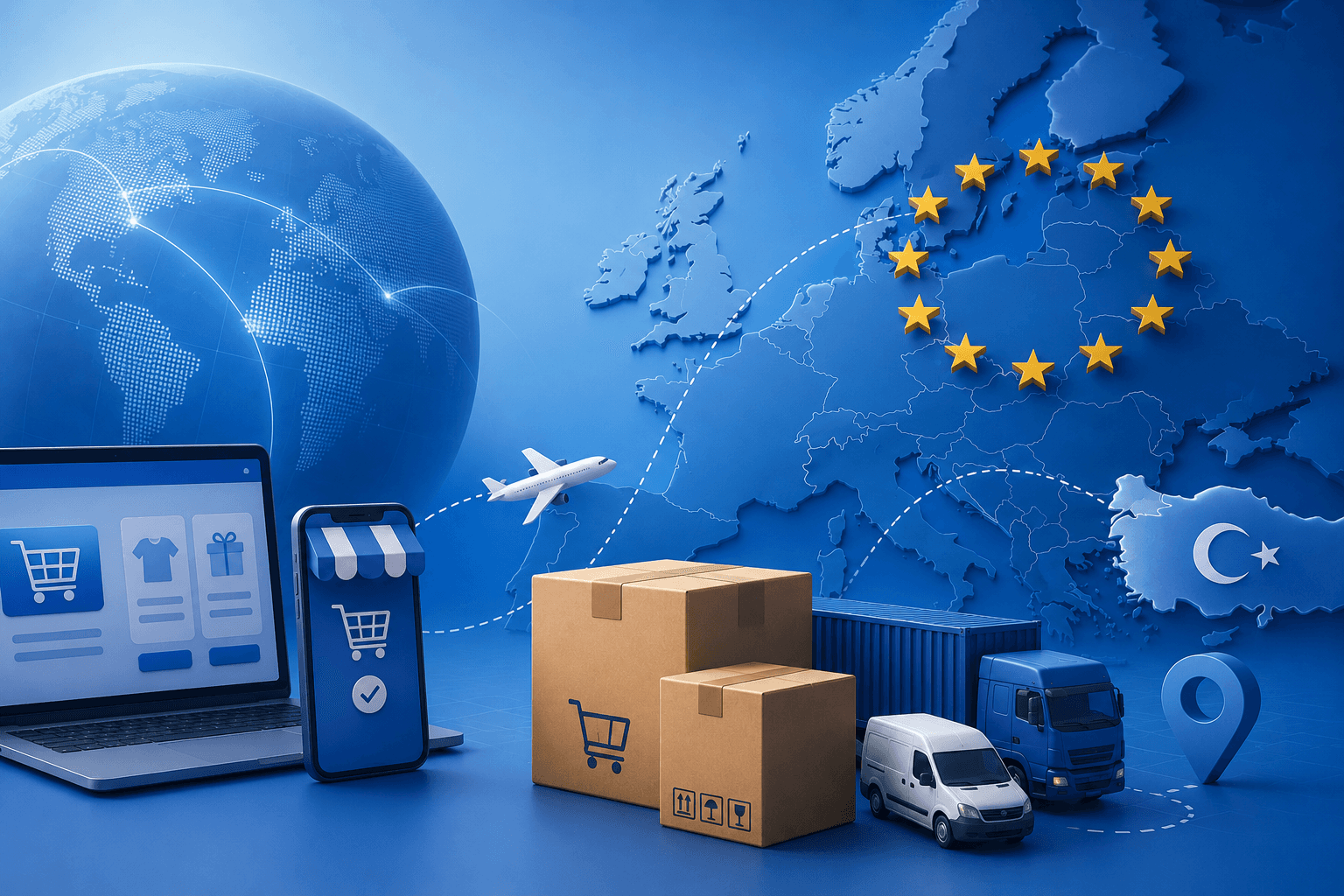
The new regulation targets low-value B2C packages shipped directly to the EU, and specifically covers small e-commerce shipments going directly from Turkey to final consumers in the EU.
In brief, the main affected sales models are:
– E-commerce orders under 150 EUR shipped directly from Turkey to customers in the EU.
– Orders shipped from Turkey to EU customers via Shopify or your own brand website.
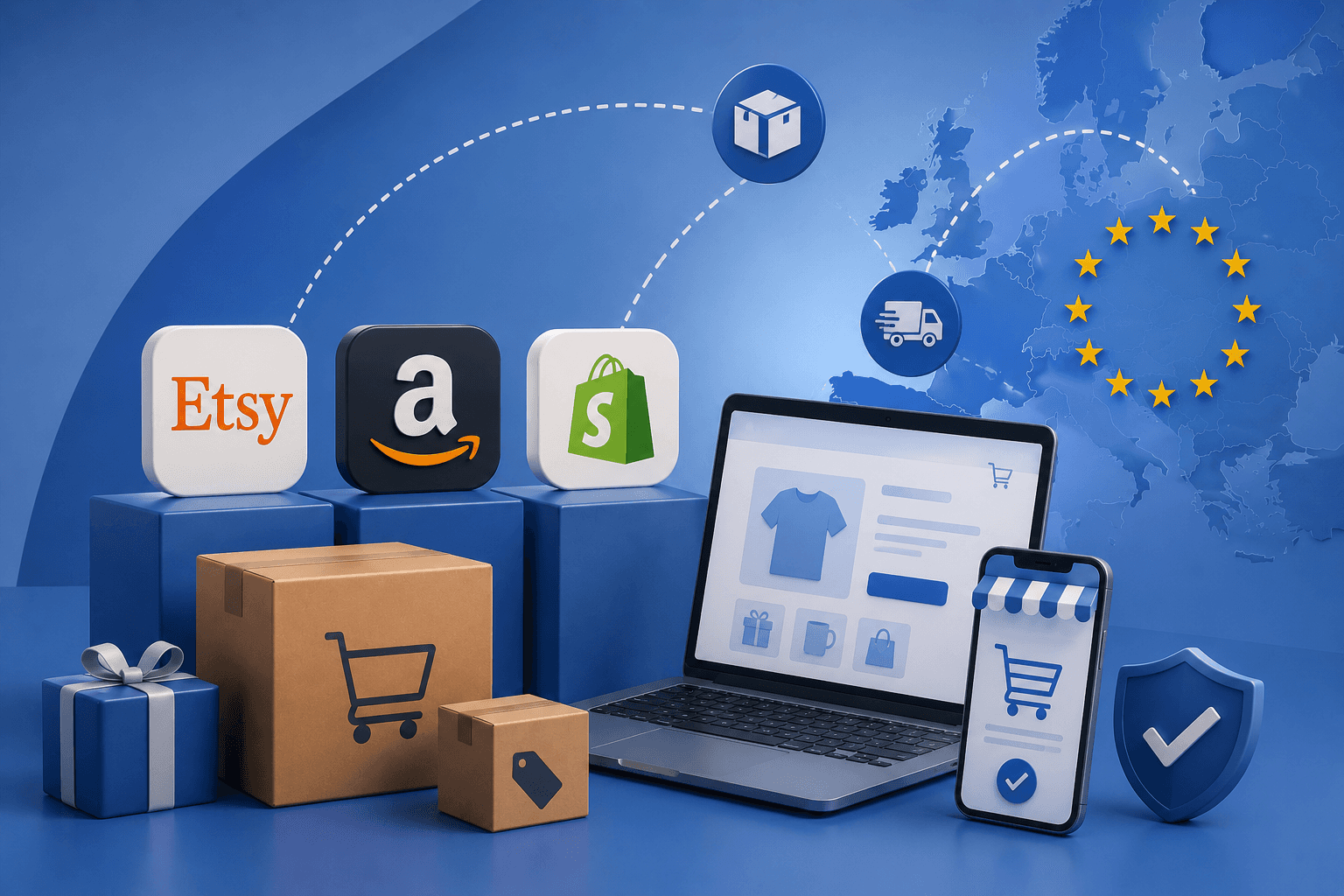
– EU orders on Etsy originating from Turkey.
– FBM (merchant fulfilled) orders on Amazon Europe, meaning orders you ship from your own warehouse.
– D2C orders received via social media channels and shipped directly from Turkey to EU consumers.
The models that are less affected or can be structured differently are:
– Fulfillment models where the product is brought into the EU through bulk import first and then sent to the final consumer from an in-EU warehouse (e.g., Germany, Netherlands, Poland).
– In-EU deliveries via Marketplace fulfillment (e.g., Amazon FBA, Pan-EU) or local 3PL.
– Sales made through local distributors/stores following bulk B2B shipments.
This distinction is dry-run critical for strategy selection for customers working with Navlungo on both direct B2C and B2B/fulfillment models.
The extent of the impact can vary significantly depending on product category, order value, shipping model, and target market. For many sellers, the biggest challenge will not be the tax itself, but the operational complexity that comes with changing customs requirements. Brands with accurate product data, reliable HS classification, robust customs processes, and clear landed cost visibility will enter this transition much better prepared.
PID, Product Description, and New Data Requirements (after November 1st)
The new EU customs system introduces significant changes not only in tax amounts but also in the quality of shipment data.
Particularly for low-value e-commerce shipments, classifying products with the correct HS/tariff code, writing sufficiently detailed product descriptions, and digitally transmitting platform-based order information to the customs system will be more strictly audited.
In this context, in the near future, product-level PID (Product ID / product identifiers), brand/model information, and category-level risk scores will be used more actively in the EU's centralized customs data infrastructure; this makes it mandatory for sellers to keep their product data updated, consistent, and transparent.
Industry guidance indicates that customs declarations, product information, and tariff classifications will biological increasingly critical in the coming years. Realizing this beforehand, having sellers review product card descriptions, origin information, and tariff/HS codes now will provide a major advantage both for current compliance and future data requirements.
For e-export companies, this is not just a change about "paying tax"; it also means reviewing the data structures used in inventory management, product sheets, invoicing, and declaration processes in accordance with EU standards.
The 3 EUR Additional Tax is Different from VAT: What is "Additional Customs Duty"?
The introduced 3 EUR amount is not a VAT; it is in the nature of a flat customs duty to be charged in addition to VAT.
This duty does not replace Import One Stop Shop (IOSS) or country-specific VAT obligations; VAT will continue to be calculated and collected separately as usual. Even if you manage your VAT obligations via IOSS, the flat 3 EUR customs duty is implemented additionally; therefore, IOSS registration does not grant exemption from this new charge.
For this reason, the following items must be evaluated together when pricing:
– Product price
– Shipping fee
– VAT (IOSS or target country VAT rate)
– Flat 3 EUR additional customs duty
– Customs/processing/handling fees (costs that may vary by country and carrier)
– Marketplace fees (Etsy, Amazon, etc.).
The practical result for Navlungo customers is this: the "landed cost" (the final cost of the product including all taxes) shown to the customer on an order sent to Europe must include this 3 EUR customs duty; otherwise, surprise costs arising at the delivery stage could negatively affect return rates and customer satisfaction.
How Will the Tax Be Calculated? (Cart examples)
On small shipments under 150 EUR, the customs duty will be applied as 3 EUR for each product item or product group in the shipment.
For example, while a total of 3 EUR tax will apply for 10 pairs of socks of the same type, a tax of 6 EUR might come into play if the content includes two different product types (for example, 1 pair of socks and 1 belt).
The flat 3 EUR charge impacts the cart much more harshly as the product price decreases and significantly presses down profitability on low cart-value orders.
Sample rates are as follows:
– Product/cart 10 EUR → 3 EUR additional tax, approximately 30% of the product price.
– Product/cart 15 EUR → 3 EUR additional tax, approximately 20%.
– Product/cart 30 EUR → 3 EUR additional tax, approximately 10%.
– Product/cart 50 EUR → 3 EUR additional tax, approximately 6%.
This table clearly demonstrates the importance of packages and bundles that increase cart values instead of single-product sales on low cart-value orders. These calculations are especially critical for brands shipping high volumes of low-value orders; margin modeling needs to be done separately for each EU market and product group.
Effects on Etsy, Amazon, Shopify, and Other Channels
Etsy Orders
Since handmade and low-priced products sold on Etsy are often in the 10–20 EUR range, the 3 EUR additional tax constitutes a proportionally high charge.
Therefore:
– Single, low-priced product sales become more fragile.
– Bundle structures like sets, gift boxes, and "double/triple packs" can make both profitability and the tax burden more manageable.
– Clarifying the "tax-inclusive pricing" and "EU delivery terms" message on product pages and shipping policies becomes critical to maintaining conversion rates.
Update Note: This section will be updated with additional analysis and evaluations as the implementation results of the regulation become clear.
Amazon EU – FBM (Fulfillment by Merchant)
For sellers shipping directly with FBM from Turkey, the cost of delivery and returns will become more visible with the new tax.
The customer will face a 3 EUR customs duty in addition to the product price + shipping + VAT in their cart, and this could affect total profitability, particularly in categories with high return rates.
Therefore, evaluating in-EU fulfillment alternatives like Amazon FBA, Pan-EU, or local 3PL warehouses could become a more strategic option to manage both the tax burden and return processes.
Shopify / Brand Website and Other D2C Channels
If you are selling to Europe through your own site, the most critical point of the new regulation is how clearly the "landed cost" information and delivery terms (DDP / DAP) are shown to the customer.
For brands that do not clearly display the total cost including taxes and any additional customs duty at the checkout stage, surprise fees charged at delivery carry the risk of increasing cart abandonment and return rates.
Integration with Navlungo and selecting the correct shipping model can provide a competitive advantage in D2C channels by supporting the promise of "clear price including taxes" and "no surprises at the door."
Customer Experience Aspect
In the changing customs landscape, customer experience is transitioning from being an operational detail into a strategic element of competition. Brands that do not offer adequate tax and shipping transparency on the checkout screen face the risk of rejected deliveries, unexpected fees, customs delays, and surprises that impact margins. Showing the customer the full cost of the product (shipping + VAT + 3 EUR customs duty) clearly prior to purchase directly reduces both return rates and customer dissatisfaction.
Possible Impacts on DDP / DAP Delivery Terms
The new 3 EUR customs duty makes the question of who pays what under DDP (Delivered Duty Paid) and DAP (Delivered At Place) delivery terms even more important.
If you are selling with DDP, you, as the seller, need to assume all costs, including customs duty and VAT, and reflect them in the price; this makes it necessary to create room in the pricing strategy for the 3 EUR burden.
Under the DAP model, customs duty and some additional costs are often passed on to the buyer; in this case, reflecting the 3 EUR additional tax to the customer at the door or during distribution may negatively affect satisfaction and repeat purchase rates.
For this reason, brand doing e-export must clarify in which market they will use the DDP and in which market they will use the DAP approach, and whether they will reflect the 3 EUR tax burden on the product price or the service structure.
6 Concrete Actions for Navlungo Customers
Classify products by price bands
Address products under 15 EUR, 15–50 EUR, and over 50 EUR in separate profitability and pricing models; since the 3 EUR burden is felt much harder on low-band products, restudy the single sale model in this group. Model margins separately for each EU market and product category, as the impact can vary significantly by product category, order value, and target market.
Switch to set/bundle setups instead of single products
Particularly for products in the 10–20 EUR range, lower the 3 EUR tax to a smaller percentage share of the cart by raising the cart value through solutions such as double-triple packs, refill sets, and gift boxes.
Clarify "landed cost" and delivery conditions
Show the customer the entirety of "product + shipping + tax/processing cost" and your DDP / DAP delivery model as clearly as possible on the checkout screen; thereby reducing surprise costs and the associated return risk.
This requires designing a more transparent experience through Navlungo’s price calculation pages and integrations. Evaluate now whether your current checkout and delivery experience provides sufficient visibility regarding customs duties, VAT, and international shipping costs.
Clean up your PID, HS code, and product data
Make your product cards compatible with the EU's new data requirements by reviewing the tariff/HS codes, product descriptions, brand/model, and country of origin details.
Since product identifiers similar to PID and more detailed electronic customs data may be expected to become mandatory in the future, raising data quality now will ease the process. Industry guidance indicates that customs compliance, tariff classification accuracy, and reporting obligations will continue to increase in the coming years.
Test the in-EU fulfillment option
Consider conducting a feasibility study for 3PL or marketplace fulfillment options in logistically advantageous locations like Germany, the Netherlands, or Poland once you reach a certain order volume.
This way, instead of being exposed to a separate 3 EUR tax and additional processing cost for each small package departing from Turkey, you can build a more sustainable structure with a bulk import + inside EU distribution model.
Prepare your e-export team and infrastructure
Companies doing e-export should review their pricing, billing, return processes, logistics agreements, and marketplace integrations with their accounting, tax, IT, and operations teams by July 1, 2026. IOSS registration and reporting structures also stand out as critical items to be checked during this process.
In this process, Navlungo can position itself as a solution partner in restructuring the correct shipping model, route selection, DDP/DAP structure, and operational flows according to the new regulation.
Frequently Asked Questions (FAQ)
Will the 3 EUR tax definitely be applied to all my shipments to Europe?
As a general rule, a flat customs duty of 3 EUR will apply to small B2C e-commerce shipments under a total value of 150 EUR entering the EU from outside the EU.
However; factors such as product type, shipment structure, IOSS registration, delivery terms (DDP / DAP), and technical implementation details of member state customs administrations may lead to different scenarios in practice. Although the legal aspect has been firmly clarified, some operational details such as collection processes of carriers and postal operators and technical implementation timelines will continue to be updated prior to July 1, 2026.
Therefore, it is important to check the current practice of each country for critical product groups with the Navlungo support team and your customs consultant.
Does this tax replace VAT?
No. The flat 3 EUR customs duty does not replace VAT; it is a separate customs duty collected in addition to VAT.
VAT will continue to be calculated on the amount including product price and shipping via IOSS or country-based systems. Therefore, your IOSS registration does not automatically cover this new tax; the two obligations continue independently of each other.
Will the tax be charged per package or per product?
For small shipments under 150 EUR, the 3 EUR customs duty will apply to each product item or product group in the shipment.
In a practical example, when you ship a single type of product, 3 EUR applies, while if there are multiple different product groups (different tariff/HS codes) in the same package, it is possible for 3 EUR to be applied for each group.
Technical details at this point, together with implementation guides of member countries, will continue to be clarified until 2028.
How can Navlungo help me in this process?
Navlungo can support you in replanning the shipping model (e.g. standard, express, DDP-like solutions) you use when sending packages to Europe, your pricing structure, and your operational flow according to the new 3 EUR customs duty regulation.
In designing product bundling, minimum cart structure, in-EU fulfillment, and DDP/DAP strategies; you can benefit from the price calculation and route options in your Navlungo panel to make data-driven assessments of which solution is more advantageous on which routes.
Final Note: Timeline and Up-to-date Status
Effective date: July 1, 2026.
Scope: Small e-commerce shipments under a value of 150 EUR shipped from non-EU countries (including Turkey) to the final consumer in the EU. EU countries where valid: Austria, Belgium, Bulgaria, Croatia, Cyprus, Czech Republic, Denmark, Estonia, Finland, France, Germany, Greece, Hungary, Ireland, Italy, Latvia, Liechtenstein, Luxembourg, Malta, Netherlands, Poland, Portugal, Romania, Slovakia, Slovenia, Spain, Sweden.
Amount: A flat 3 EUR customs duty per product item/product group in small shipments; applied in addition to VAT.
Temporariness: Planned as a bridging regulation between 2026 and 2028, with the subsequent goal of transitioning to the conventional tariff structure for low-value shipments.
Implementation details: Although the legal framework has been approved, collection processes of carriers and postal networks and technical implementation guides will continue to be updated in some member countries until July 1, 2026. It is of high importance to closely follow the updates coming from customs authorities, carriers, and industry stakeholders.
We strongly recommend that Navlungo customers make an independent assessment with their customs brokers and financial advisors regarding their specific situations based on product, country, and sales model.