Summarize this text with artificial intelligence
Choose your preferred tool to generate a short summary of the text.
One Stop Shop refers to an approach where you can find all services in one place or from a single source to meet your different needs. This service point allows things to be done more easily, saving time, effort, and energy.
This model, which can be applied in many different sectors, offers a comprehensive range of services by bringing service providers and clients together.
In this content, you will explore the advantages and usage areas of the One Stop Shop approach. So let's get started! 🚏
What is a One Stop Shop?
The term "One Stop Shop" refers to a business model where multiple services are offered in one place or from a single source. In this model, instead of going to different places to meet their various needs, customers can access all services in a single center.
Thus, saving time is achieved. At the same time, it aims to provide a easier and more comprehensive service to customers.
For example, a "One Stop Shop" shopping mall brings many different retail stores and service providers together under one roof. Thus, it offers a wide range of products and services to customers.
Similarly, governments or organizations also provide convenience to citizens or businesses by offering certain services (e.g., transaction applications, tax payments, license applications, etc.) at a single point.

What is the One Stop Shop Tax System?
The "One Stop Shop Tax System," or "OSS" for short, is a tax regulation for businesses selling through electronic commerce among European Union (EU) member countries. OSS is a part of the EU VAT Reform Package that came into effect on July 1, 2021.
OSS is designed to facilitate and regulate VAT (Value Added Tax) payments of electronic commerce businesses in their sales to different countries within the EU.
Previously, when a business sold to multiple countries within the EU, it had to register and pay VAT separately according to the VAT legislation of each country. This situation created a bureaucratic and financial burden for businesses.
The OSS system allows businesses to manage and report their sales within the EU through a single member country. By registering for the OSS system, the business declares all its sales within the EU in this member country and makes VAT payments from a single place.
The system then distributes these payments to the respective member countries. The OSS system greatly facilitates businesses and simplifies the VAT process for sales within the EU.
Note: The details and application rules of the One Stop Shop Tax System may differ according to the legislations of the member countries. Therefore, it is important to use the OSS system in accordance with the legislation of the relevant member country.
What Are the Advantages of a One Stop Shop?
• Offering all services in one place or from a single source provides great convenience for customers.
• Instead of going to different places or applying to different sources, customers can access their needs in a single center.
• Carrying out transactions quickly and effectively allows customers to use their time more efficiently.
• One Stop Shop acts as a catalyst for better coordination and integration among different service providers.
• Receiving service at a single point has the potential to reduce costs and increase efficiency.
• Businesses or government agencies manage resources more effectively by offering services at a central point.
• Convenience, accessibility, and fast service delivery increase customer satisfaction and provide a positive experience.
• Providing coordination and integration among different service providers, the One Stop Shop reduces bureaucracy. It simplifies transactions, eliminates unnecessary procedures, and ensures faster completion of transactions.
What Are the Disadvantages of a One Stop Shop?
• Services offered at a single point may remain limited when evaluated in terms of diversity.
• Offering many different services in the same place may cause quality problems in services that require expertise and in-depth knowledge.
• Since coordination, management, and reporting processes between different services can be complex, slowdowns or disruptions in transactions may be experienced.
• Multiple service providers operating at the same point may increase the risk of inconsistency in service quality. Having different standards or procedures for each service provider can lead to differences in service quality among customers.
• A robust technological infrastructure and effective communication channels are required to offer different services in an integrated manner. Infrastructure deficiencies or communication problems can cause disruptions or delays in service delivery.
Use of One Stop Shop Technology in Logistics
The "One Stop Shop" model can also be used in the logistics sector. The use of this model in logistics ensures that logistics processes are managed more effectively and efficiently. Examples of how One Stop Shop technology is used in logistics can be listed as follows:
Integrated Logistics Platforms
Different logistics service providers come together on a single platform. There are integrated logistics platforms that facilitate supply chain management. These platforms promote collaboration and data sharing by bringing together suppliers, carriers, warehousing providers, and other logistics service providers.
Logistics Software
Logistics software adopting the One Stop Shop approach integrates different logistics functions into a single system. This software offers businesses a centralized management opportunity by combining logistics processes such as inventory management, order tracking, warehouse management, and transportation planning on a single platform.

Electronic Data Interchange
The One Stop Shop model facilitates data sharing and integration. Electronic Data Interchange (EDI) in logistics processes allows documents and data to be shared electronically among different parties. This situation ensures the acceleration of logistics processes, increased data accuracy, and a reduction in manual operations.
Central Tracking and Control
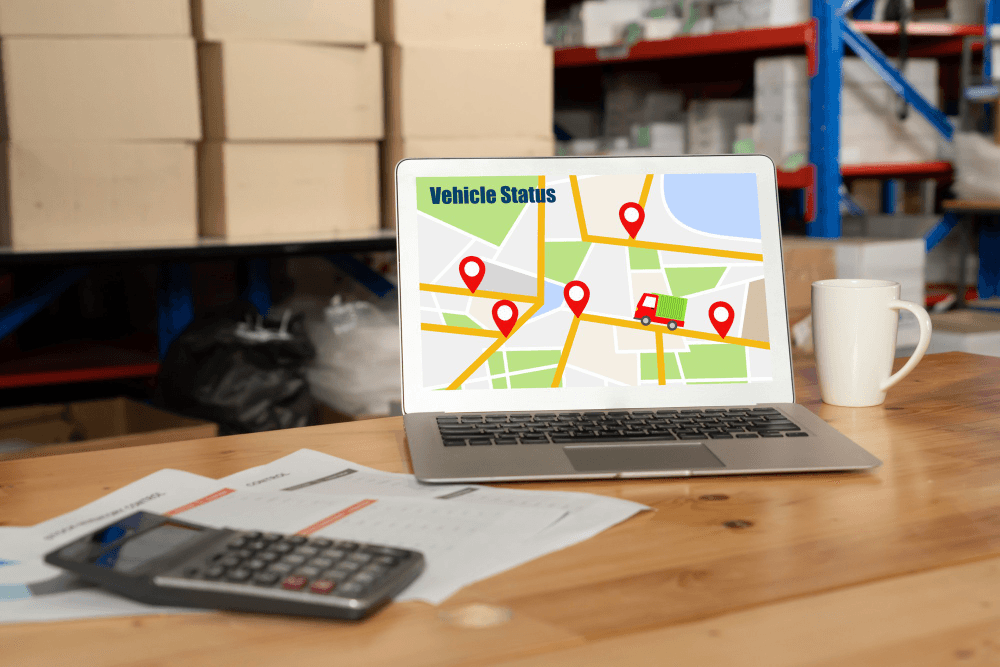
With the One Stop Shop approach, logistics processes can be easily managed by tracking them from a central point. For this, logistics management systems or tracking and tracing software can be used. Thus, shipping, inventory, and supply chain activities can be managed from a single place and intervened in when necessary.
Customer Portal
An integrated customer portal can be offered to customers with the One Stop Shop approach. This portal allows customers to track all their logistics processes, manage their orders, and check their inventories.
Thus, customers can monitor progress in logistics processes in real time and have a better customer experience.
The use of One Stop Shop technology in logistics increases efficiency, reduces errors, and raises customer satisfaction by integrating processes. These technological solutions offer the opportunity to gain a competitive advantage by ensuring more effective management of logistics processes.