Summarize this text with artificial intelligence
Choose your preferred tool to generate a short summary of the text.
There are many ways to generate additional revenue for your business. You can introduce new products, offer additional services, and increase your prices. However, you must also know how to effectively sell your existing products to your customers.
Therefore, you must develop aggressive strategies for promoting and selling your products. Most businesses use sales techniques to make successful sales and effectively promote their products. So, what are sales techniques and why are they important? Here are the details you need to know about sales techniques.
What is Sales?
Sales is the term used to describe the activities that lead to the sale of products or services. Every business has sales organizations divided into different teams. These teams are determined by the region they sell in and the product or service they sell.
Companies dedicate entire departments to selling their products or services and stack them with employees who know sales techniques. Salespeople reach out to individuals who would be interested in buying the products or services the companies sell. Potential customers visit the company's website or interact with the company through social media. The goal is to reach many customers with effective sales techniques.
What are Sales Techniques?
Sales techniques are used by a sales team to generate revenue and progress more effectively. A technique is usually not a one-size-fits-all formula. That is, it emerges through trial and error. They are strategies aimed at improving and developing a business's sales process.
Therefore, a sales methodology has a flexible structure. Changes can be made after trials conducted to determine its effectiveness. Additionally, the sales process is sometimes used interchangeably with the sales technique. The sales process takes you from A to Z. On the other hand, a sales technique refers to the strategies you implement to improve your sales process.
If you are wondering how to make sales, you can use the techniques conceived by sales gurus. This way, you get the chance to progress with fast sales techniques. At the same time, you get the opportunity to increase your business's revenue and profit. On the other hand, persuasion techniques must also be used in sales.

Why are Sales Techniques Important?
Sales techniques help increase your performance and satisfied customers. For this reason, you should polish your sales skills with tips aimed at identifying customer needs and closing sales in a satisfying way.
If you are wondering how to make effective sales, you should work on developing your skills. Because improving your sales skills also allows you to anticipate customer concerns. This enables you to make your products or services stand out.
In fact, sales marketing techniques mean explaining how your product works, what value it provides, and why your ideal customers need it. In other words, every business owner needs to deal with sales. Entrepreneurs who lack basic skills may face some challenges.
To secure financing, motivate and inspire employees, and win customers, it is necessary to progress with sales tactics. Moving forward with sales strategies is involved in every major endeavor.
What are Sales Techniques?
Sales techniques are used by sales professionals to persuade customers to buy. For example, salespeople need to establish effective communication with the customer when advancing with telesales techniques. Besides, they must move forward with examples of sales strategies. So, what are sales techniques? Here are some of the popular sales techniques.

1. Cross-selling
Suggesting products similar to the products your existing customers have purchased is called cross-selling. It is among the effective sales techniques. It can also be defined as a sales and marketing tactic used throughout the customer journey to get a buyer to spend more.
For example, let's assume you have a fast-food shop. A customer of yours orders a hamburger. You ask if they want French fries with it. Your customer buys the French fries as well.
In other words, you have done cross-selling. At the same time, let's assume you sell suits. Your customer is going to buy a suit. In this case, you can offer your customer a tie. This way, you can develop long-term relationships with your customers.
You can move forward with effective sales methods. Along with this, you get the chance to increase the average order value and customer satisfaction.
Effective cross-selling examples
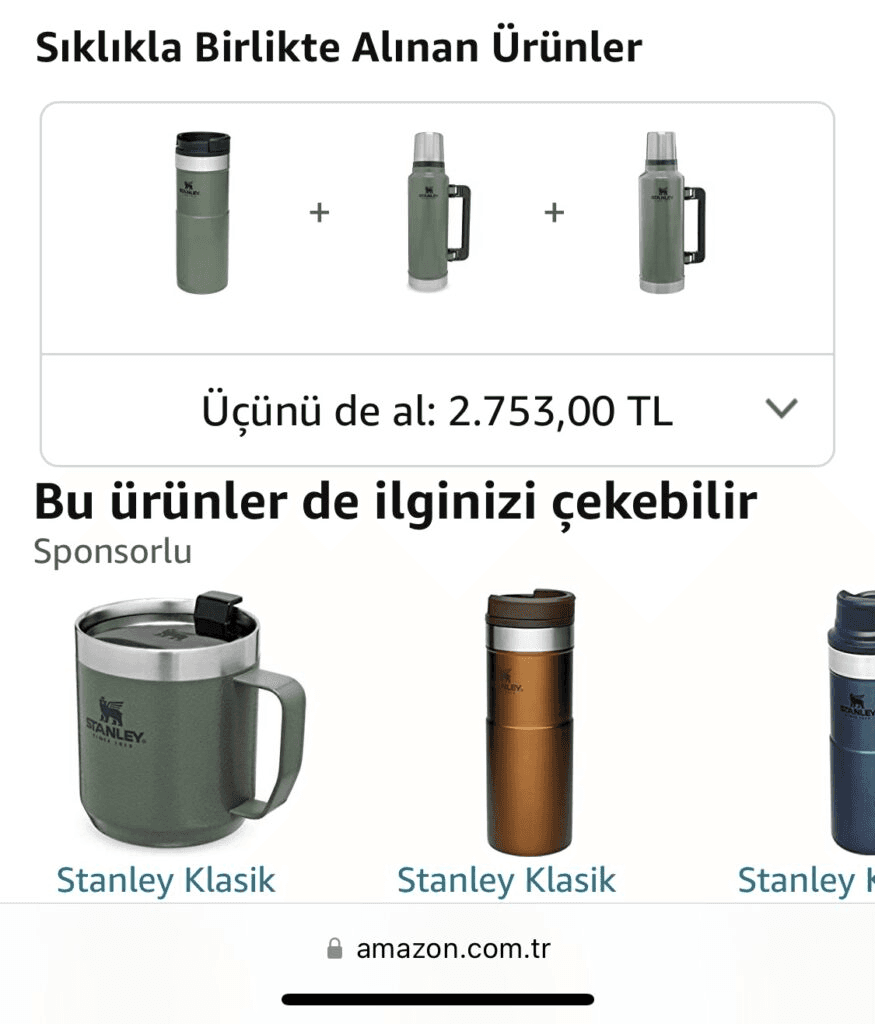
• Amazon frequently shows frequently bought together products on each product page. This approach allows consumers to purchase compatible and necessary products.
The Amazon brand offers a "frequently bought together" section for cross-selling.
• Let's assume you have a firm selling electronic goods. Your customer wants to buy a digital camera. In this case, you suggest a memory card to your customer.
• Most clothing stores suggest accessories when selling clothes. They ensure that products that will complete the outfit are added to the customers' carts.
• Let's assume you have a business selling computers. When the customer wants to buy a computer, you try to sell a mouse along with it.
• A clothing store displays mannequins with complete outfits and accessories. Shoppers can see how all the products come together. Thus, the customer may want to purchase all the products at the same time.
• Imagine a consumer buying a bicycle. The firm offers a discount on the bicycle lamp. This makes it easier for the customer to buy the lamp.
• An online bedding company adds a gallery of co-preferred products to the bottom of the product page. It suggests items like pillows and bed linen to customers buying mattresses.
2. Upselling
Trying to sell customers an advanced or premium version of the product they initially intended to buy is called upselling. For example, let's imagine you have a business selling technological products. Your customer wants to buy a television.
You try to sell your customer a better one or a version that offers additional features than the television they are looking at. If you persuade them, you have done upselling. Thus, you offer your customers options that can better meet their needs.
It needs to be used together with the cross-selling technique to increase average order value and profit. When you raise your customer retention rate by 5%, you can increase your profits by 25% to 95%.
Effective upselling examples
• An airline company tries to upgrade the passenger's seat selection. That is, it makes an effort to upgrade the passenger's seat to a first-class seat.
• A fast-food restaurant offers to upgrade the customer's meal to a larger size. It tries to position the offer based on the customer's needs and preferences.
• A car dealer tries to sell the driver a more equipped car than the one they want to buy. The car's seats or audio system are better than the car the driver wants to buy.
• The Apple brand uses the upselling technique when selling iPhone phones. For example, it tries to sell a 128 GB product to a customer who wants to buy a 64 GB phone.
• Let's say your customer added a pair of sneakers from last year's collection to their cart. You expose your customer to photos of new season and expensive sneakers. Thus, the customer can turn towards a similar and expensive product.
3. SPIN selling
SPIN selling covers a process about asking the right questions. Asking the wrong questions can affect your entire sales process. It can even bring your sales to a standstill. SPIN helps you attract the prospect's attention. To get customers to shop, you need to ask 4 different types of questions: Situation, Problem, Implication, Need-Payoff.
Situation questions are the basis of the sales cycle. By understanding your customer's need, you understand whether your offer will work or not. This information is a critical element in your sales cycle. You should perform work on what questions to ask.
Problem questions make your prospect aware of their problem that needs to be solved. It allows you to identify problems that should not be overlooked. These pain points are used to speed up the agreement with the customer.
Implication questions focus on the negative impact of problems. Thus, it highlights the urgency. When the prospect realizes how the situation can worsen, need-payoff questions are put into play. Asking the right questions allows you to focus on the right results.
Examples of SPIN selling
• Situation questions: The salesperson asks their customer, "Can you tell me about your current marketing strategy?" Customer: "We use social media and email marketing." Here, the salesperson gathers information about the customer's current situation.
• Problem questions: The salesperson asks, "Are you experiencing any problems with your current marketing approach?" Customer: "We are not getting the engagement we expect." Here, the salesperson tries to identify the problems the customer is experiencing.
• Implication questions: The salesperson asks, "What kind of impact does low engagement have on your business? Customer: "It makes our revenue and customer retention difficult." Thus, the importance of the problems for the customer is highlighted.
• Need-payoff questions: The salesperson asks, "Would solving these problems positively impact your revenue and customer retention? Customer: "It helps increase sales and brand loyalty."
4. Social proof
The social proof technique requires you to use the people around your potential customer to increase your credibility. That is, you must show your prospect that other people around them use the product and are satisfied with it.
It is possible for you to use testimonials, case studies, or reviews. This technique is valuable in terms of yielding good results.
Example of the social proof technique
• Let's imagine you have a technology company. To sell the product to your customer, you showed testimonials, reviews, and case studies. When the customer sees satisfied people, they trust your product or service. This is called selling with the social proof technique.

5. Storytelling
The storytelling technique allows the potential customer to establish an emotional bond with your brand. To use this technique, you must get to know your target audience thoroughly. Because you must tell a story around the values that are important to your target audience.
The story can be about your brand and your customers. This way, you get the chance to make a sale by providing an emotional connection.
Example of the storytelling technique
• Let's say you have a software company. You tell your potential customer how your previous clients achieved success thanks to your software. You highlight the challenges they faced, the solutions you offered, and the positive outcomes. This makes it easier for your prospects to connect with real-world problems.
How to Choose the Right Sales Technique for Your Business?
To choose the sales technique that fits your business, you should follow these steps:
• You should review and plan the sales process.
• You should identify your customers' needs and buying habits.
• You should define which sales techniques you will use at each stage.
• You should test potential techniques.

What Should You Pay Attention to When Advancing with Sales Techniques?
While progressing with sales techniques, you need to pay attention to some points. Here are the points you need to pay attention to.
• You should present your brand as trustworthy and honest.
• You must never be afraid of rejection.
• You must display a positive attitude.
• You should prioritize your customers.
• You should take care to be courageous.
• You should make an effort to progress with persuasion methods.
• You must know the answer to the question of what the sales process stages are very well.
Most businesses can use sales techniques to maximize profit and increase revenue. Also, every sales technique can benefit your customers when handled carefully. We hope this content allows your brand to gain a competitive advantage in your sales efforts. We Wish You Big Sales!