Summarize this text with artificial intelligence
Choose your preferred tool to generate a short summary of the text.
In Germany, the export expectations index of companies fell to minus 3.9 in June as a result of US President Trump's tariff policies that create uncertainty; this represents a 0.9-point decrease compared to May. According to data from the Ifo Institute for Economic Research, export firms, especially in the food and automotive sectors, revised their forecasts negatively due to the uncertainty.
According to Ifo’s analysis, if Trump continues the tariffs, Germany's exports to the US are expected to drop by 38.5% and its exports to China by 4.7%. In this scenario, it is stated that significant losses in value added will be experienced, particularly in the automotive and pharmaceutical sectors.
The German government also described this uncertainty as a “serious risk to global trade, production, and investment.” While experts warn that Germany's export-oriented economic model has become fragile, they emphasize that a weakness in production could occur if tariff uncertainties continue.
These developments once again demonstrate the necessity for Germany to review its export performance and international trade strategies.
Transit System Sounds the Alarm: Excessive Penalty Burden Challenges the Sector
Turkey’s strategic transit transport is under serious risk due to excessive penalty burdens in the customs system. In particular, the disproportionate penalties imposed on the guarantee system are described by industry representatives as "leading to a dead-end."
Medium and large logistics companies state that under the Transit Regime in customs legislation, responsibility in transit loading operations is placed on the wrong parties. For example, guarantor companies are penalized as the party responsible for the error, even though they are not directly involved in the transport processes. Expressing this situation, Selçuk Yılmaz, General Manager of Oregon Technology Services, criticized the unfair attribution of responsibility, saying, “I am carrying this cargo, if it gets lost, the guarantee system is ready to pay. But if the cargo turns out to be different, the responsibility does not belong to the guarantee system.”
Industry representatives argue that penalties reaching up to 600 million TL increase the burden on companies in the Guarantee System, and that this situation could weaken Turkey's transit potential. It is emphasized that in order for Turkey to maintain its critical strategic position, fair distribution of responsibility sharing and a reconsideration of penalties are needed.
Electric Truck Crosses the Channel by Ferry: A Milestone in Sustainable Logistics
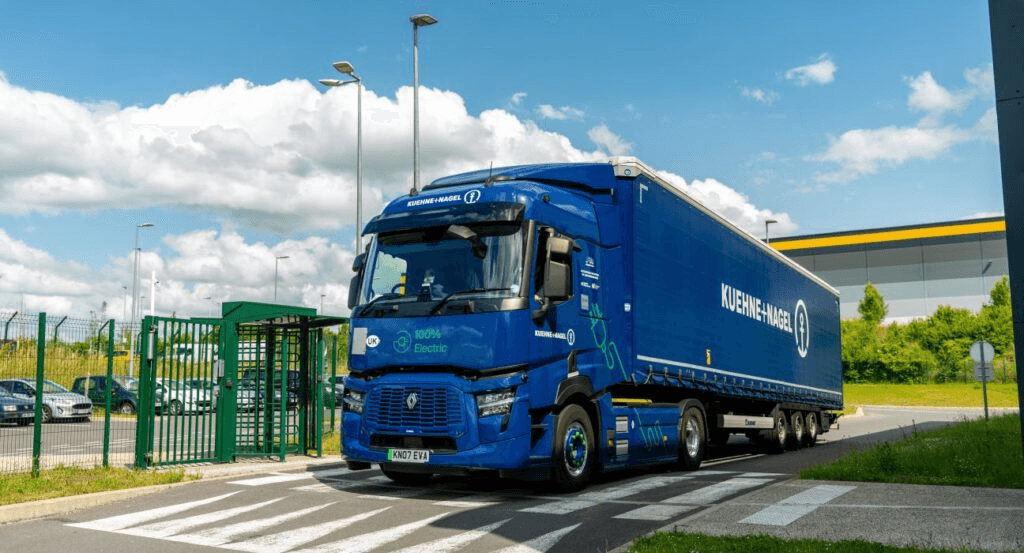
In a milestone logistics operation that took place this month, a heavy-duty electric truck successfully completed the Dover–Calais route by crossing the English Channel by ferry for the first time. The 40-ton Renault Trucks E-Tech T was transported using the hybrid vessel P&O Liberté in collaboration with Kuehne+Nagel and P&O Ferries. The P&O Liberté emits 40% less carbon emissions compared to traditional ferries.
In the trial, the truck set off from the Derbyshire East Midlands Gateway depot in the UK, unloaded and reloaded cargo at a depot in Amiens near Calais, and was then recharged. In total, a round-trip journey of approximately 1,100 kilometers was completed.
The project demonstrates that heavy electric vehicles are operationally viable in integrated ferry transport systems, and that this route can be transformed into the carbon-neutral logistics corridors of the future. This successful crossing is seen as a major step in the electrification of international freight transport and paves the way for similar environmentally friendly logistics practices in the future.
Record Increase in Turkey–Italy Trade: Reached 5.3 Billion Dollars
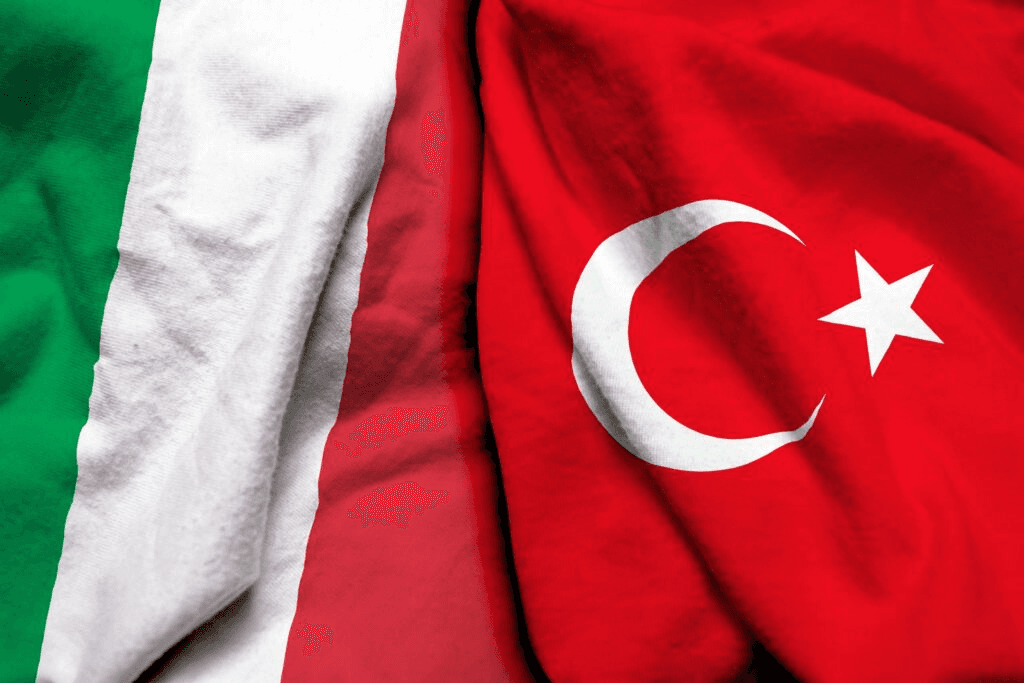
In the January–May period of 2025, Turkey recorded a 7.5% annual increase in its exports to Italy, reaching an export volume of 5.34 billion dollars. This export once again demonstrated its strategic importance with a 4.8% share in Turkey's total exports.
The automotive sector held the leading position, with 1.3 billion dollars of exports realized to Italy in this period. This was followed by chemicals (777 million dollars), iron and non-ferrous metals (472.5 million dollars), steel (456.1 million dollars), and textile raw materials (327 million dollars). Significant increases were experienced especially in the chemical (+14.6%), iron and non-ferrous metals (+37.4%), and steel (+9.4%) sectors.
The geographical distribution of exports was also noteworthy. Leading with Istanbul, provinces such as Kocaeli, Bursa, Izmir, and Ankara were among the regions exporting the most to Italy.
Within the framework of the Fourth Turkey–Italy Intergovernmental Summit, 11 agreements were signed, and a target of 40 billion dollars was set for the bilateral trade volume. In this context, strengthening of commercial relations as well as defense industry collaborations is expected.
This development stands out as a pioneering step in terms of permanent structuring and regional integration in Turkey–Italy commercial relations.
“Seamless Connectivity, Boundless Opportunities”: Global Transport Forum Begins in Istanbul
The “Global Transport Corridors Forum” to be held at the Istanbul Congress Center between June 27–29, 2025, will position Turkey as a global leader in the field of transport. Hosted by Minister of Transport and Infrastructure Abdulkadir Uraloğlu and opened by President Erdoğan, the event will bring together ministerial representatives from more than 70 countries, international organizations, and industry stakeholders.
At the forum, multimodal transport models integrating maritime, land, rail, and air routes, digital transformation, harmonization of transit transport procedures, energy corridors, and infrastructure investments will be discussed. Uraloğlu emphasized that Turkey, with its “Middle Corridor” projects, creates an alternative that is twice as fast and four times more economical compared to the uncertainties in Suez and the Cape of Good Hope.
In particular, the Middle Corridor Promotion Event to be held on June 28 will offer a platform where ministers and industry representatives from countries along the corridor will come together to exchange views on new collaborations and routes.
Reaffirming the vision of “No Corridor Without Turkey,” Uraloğlu said they aim to strengthen our country's strategic importance in the global logistics network. The World Bank and other international financial institutions also support the forum.
This forum will be a milestone aiming to shape not only transport policies but also infrastructure and logistics systems globally to achieve sustainable development goals.
Call from the EU to Turkey: A New Era Begins in Trade, Investment, and Defense

Markus Slevogt, President of the European Turkish Trade and Investment Council (ETTIC), invited the European Union to deepen relations with Turkey in his statement in Brussels. He emphasized that the Customs Union should be updated, defense cooperation increased, and the investment environment improved.
Slevogt said, “The trade volume between Turkey and the EU is approximately 230 billion euros annually,” adding, “Turkey conducts more than 40% of its business volume with the EU.” He also noted that European companies have invested 210 billion euros in Turkey since 2002.
Comparing the Customs Union to “Windows 2.0,” Slevogt stated that the current structure is far from covering areas such as e-commerce, artificial intelligence, services, agriculture, public procurement, and dispute resolution. Therefore, he called for an update. Aiming to bring a new commercial and strategic momentum to Turkey–EU relations, this call serves as an important signal for the modernization of the Customs Union and the expansion of strategic partnership areas.
Unconditional Access to the World Market with Navlungo
Our end-to-end logistics solution makes your international shipments faster, easier, and more reliable with real-time tracking and a transparent process.